
Why integration matters
A fast filler will not improve output if the capper, labeller or conveyor layout becomes the bottleneck.
When filling and capping are integrated, the machine choice must account for bottle indexing, cap feed, cap torque, conveyor speed and accumulation.
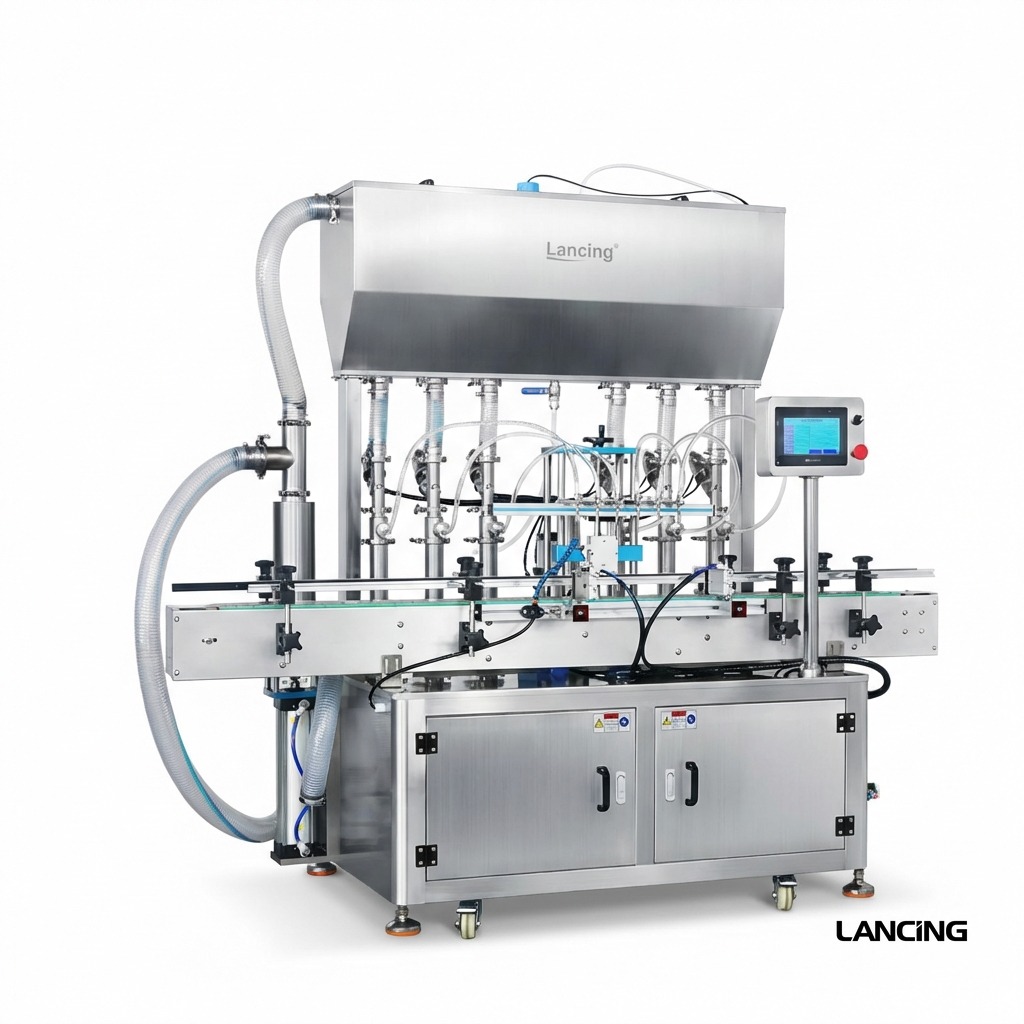
These are the main points to check before asking for a quote. They help avoid a filler that looks suitable on a catalogue page but fails in real production.
These points help Lancing UK shortlist the right piston, pump, cup, semi-automatic or automatic filling route.
A fast filler will not improve output if the capper, labeller or conveyor layout becomes the bottleneck.
Specify filling, capping and labelling around real bottles per minute rather than independent machine speeds.
These related pages cover adjacent product types, machine formats and line-integration decisions.
Yes. Filling can be planned with cap placing, cap tightening, labelling, coding and conveyors.
Cap diameter, thread type, closure style, torque requirement and whether caps are supplied loose or oriented.
Yes. The line speed and indexing method need to work together.
Possibly, if speed, layout and control integration are compatible.
Send your product, fill volume, container, throughput target and any downstream equipment needed. Lancing UK will narrow the most practical filling route before quotation.