
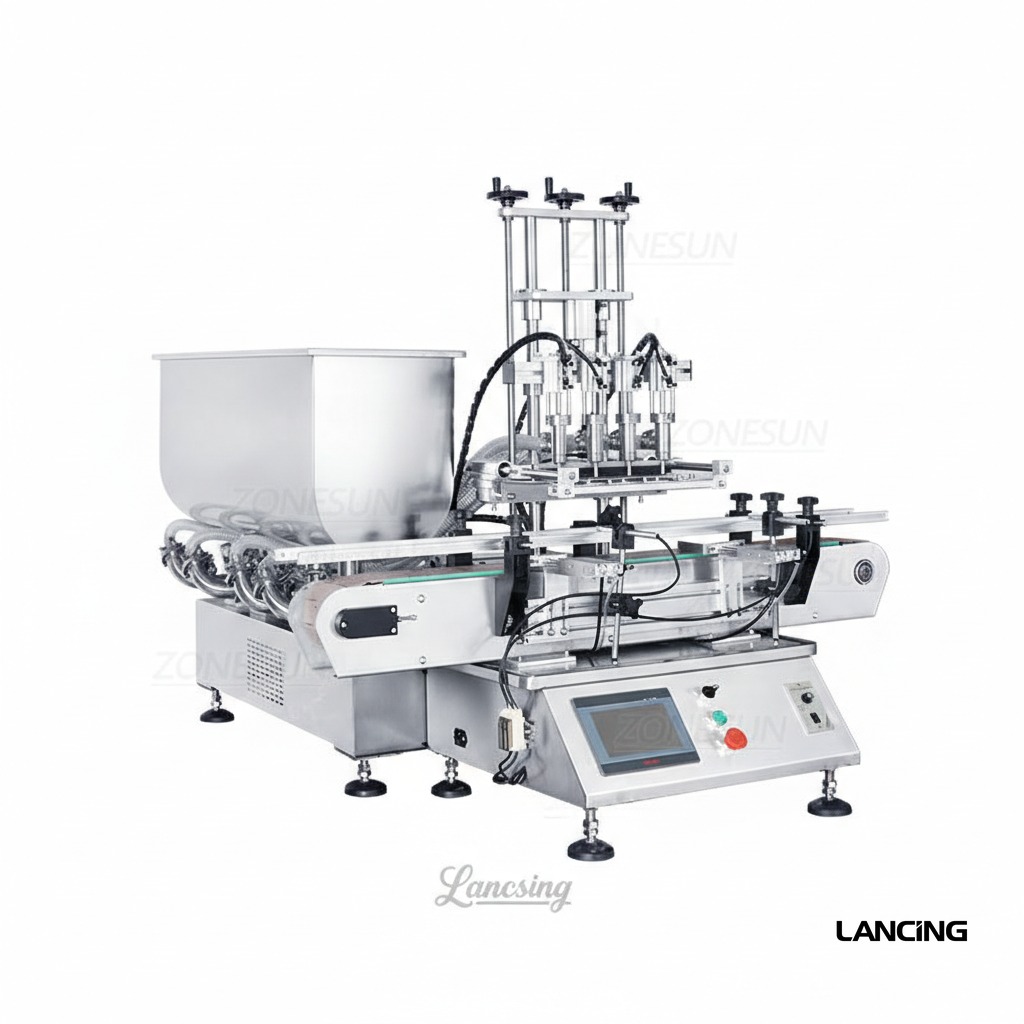
Four-nozzle pneumatic fillers
For liquids and pastes where a compact machine and operator-supervised workflow make commercial sense.
Shortlist the right filling technology by product behaviour, fill range, container format, speed and integration requirement.
Piston fillers are often the practical route for viscous products that need positive displacement, controlled cut-off and repeatable fill volumes.
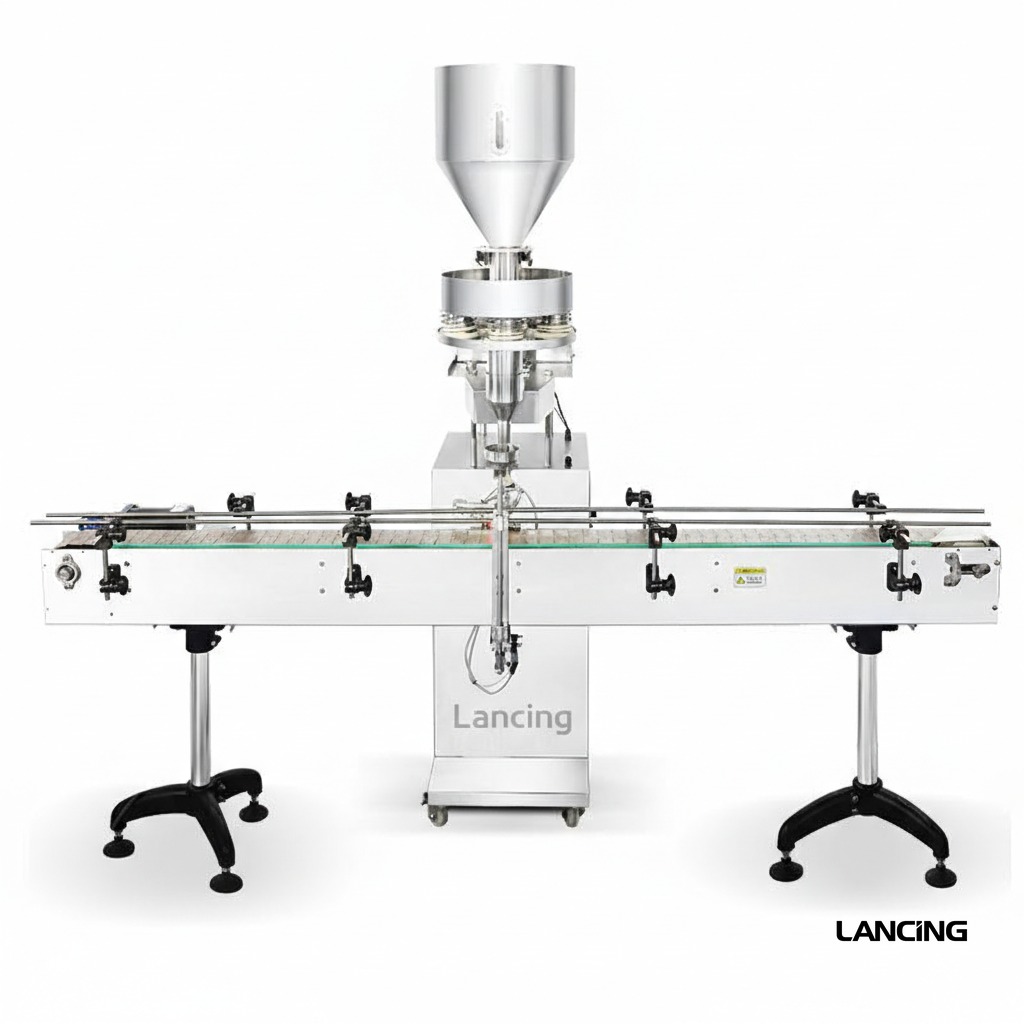
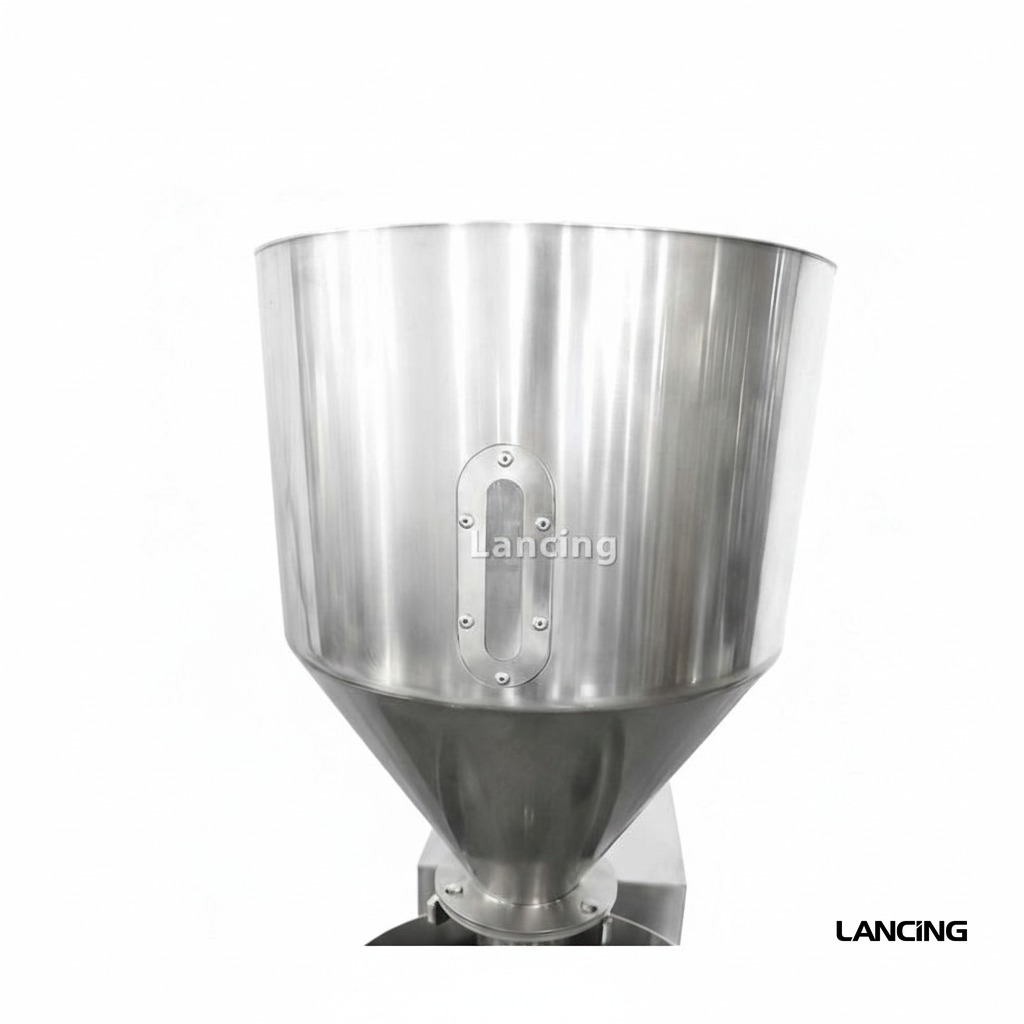
Cup dosing works well where the product is consistent, free-flowing and suited to repeatable volume measurement.
These systems suit shorter runs, product trials, frequent changeovers or lower-volume production where a fully automatic line is not justified.
For liquids and pastes where a compact machine and operator-supervised workflow make commercial sense.
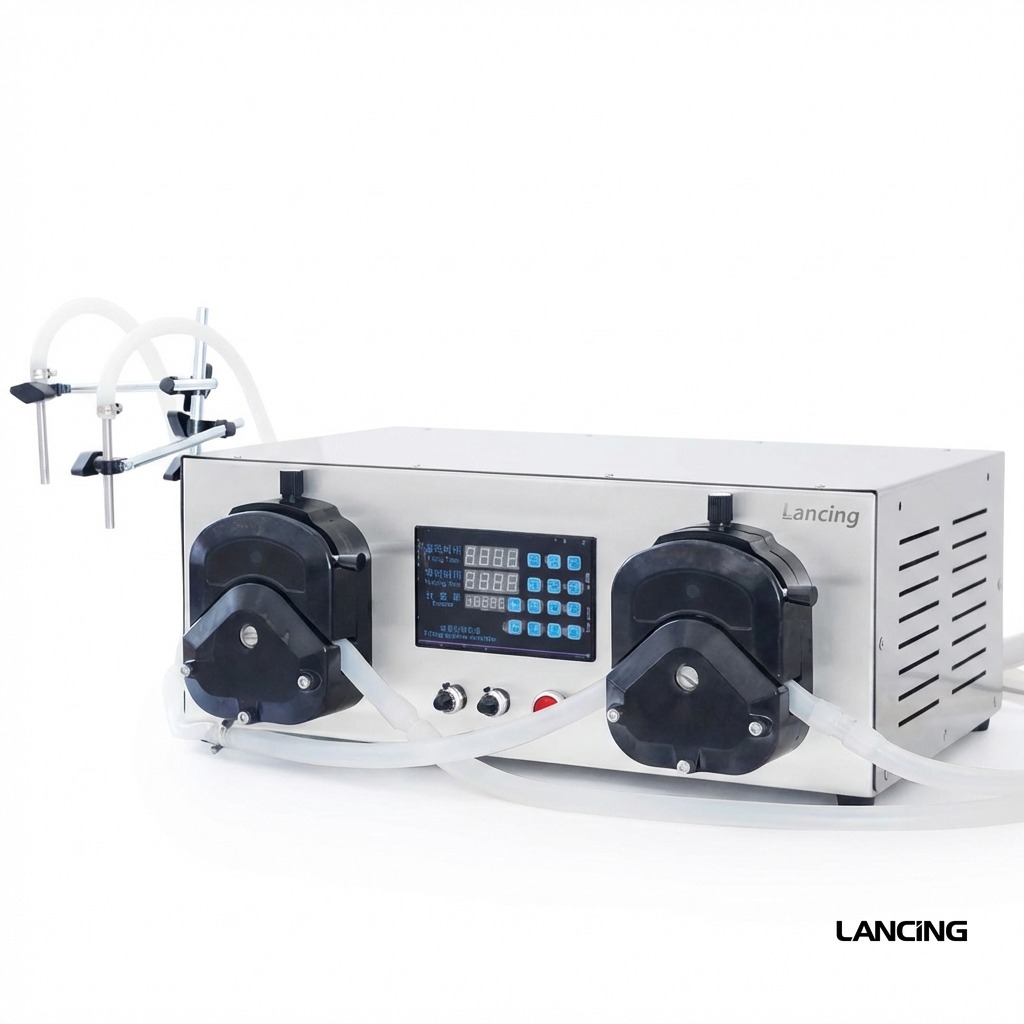
For cleaner-contact liquid dosing where the product route and tubing changeover are important.
For improved control and repeatability on viscous products where recipe adjustment matters.
Where the filler must work as part of a complete packaging process, line planning matters as much as the filling machine itself.
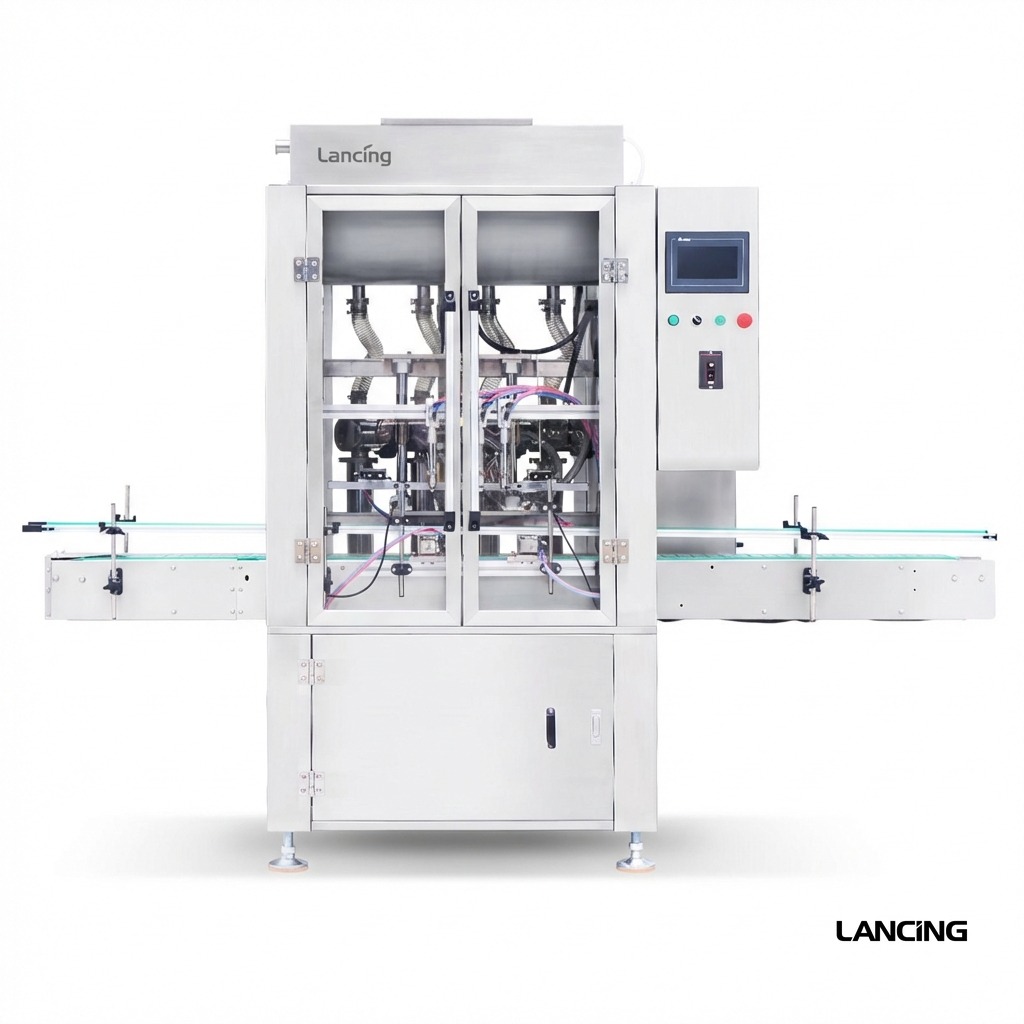
Multi-head formats for faster bottle production with conveyors, indexing, bottle gating and filling control.
Connect filling to cap application, torque control, labelling, coding and finished-pack discharge.
Specification, layout planning, installation, commissioning, spares and aftercare through Lancing UK.
| Route | Best for | Typical products | Key check before quote |
|---|---|---|---|
| Piston filler | Viscous liquids and pastes | Sauces, creams, gels, honey, lotions, detergents | Viscosity, particulates, fill range, cleaning route |
| Volumetric cup filler | Free-flowing granules | Beans, seeds, coffee, sugar, small granules | Bulk density, flow, cup size and target accuracy |
| Peristaltic/pump filler | Cleaner liquid product path or pump-metered liquids | Thin liquids, sensitive liquids, oils and similar products | Flow rate, tubing/contact parts and product compatibility |
| Automatic inline system | Higher-throughput production | Bottles, jars and containers that continue to capping/labelling | Line speed, conveyor layout and downstream equipment |
A piston filler uses a measured chamber to draw and dispense liquid or paste. A volumetric cup filler uses calibrated cups or measuring volumes for dry, free-flowing granular products.
Many piston filling systems can be configured with different head counts and fill-volume ranges. Final configuration depends on product, container and throughput target.
Servo control can improve adjustability, recipe storage and control for repeatable production, but pneumatic or simpler systems may be more suitable for smaller budgets or manual workflows.
Send your product, fill volume, container, throughput target and any downstream equipment needed. Lancing UK will help narrow the best machine route before quotation.
The figures below are taken from current first-party Lancing product pages. They describe reference configurations rather than a universal promise for every product. Final output, repeatability and clean filling depend on the product, pack and settings used during the test.
| Published configuration | Defined dose or range | Reference output / condition | Useful selection evidence |
|---|---|---|---|
| LU-GY1C pneumatic piston filler | Optional modules: 5–100, 10–300, 50–500, 100–1000, 500–3000 or 1000–5000 ml | 10–20 bottles/min; published accuracy ≤ ±0.5%; 0.4–0.6 MPa air | Single-head semi-automatic route with a published 10 mm nozzle reference. Product, speed and setup conditions still require confirmation. |
| LUDTHSP2 compact piston filler | 5–100 ml through to 1000–5000 ml module options | 2 heads, configurable to 4; approximately 10–30 bottles/min; published accuracy ≤ ±1% | Compact conveyor-fed route for products such as soap, shampoo and detergent, subject to viscosity and nozzle review. |
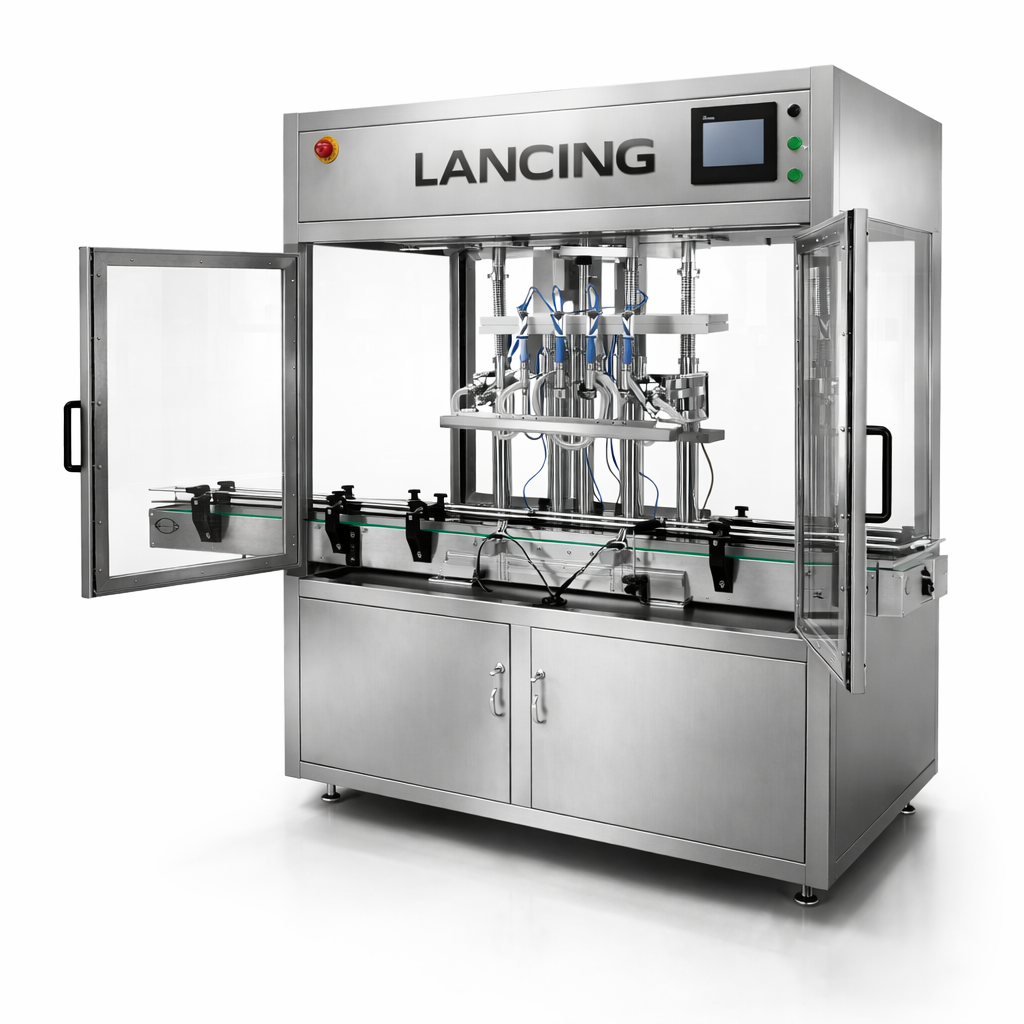
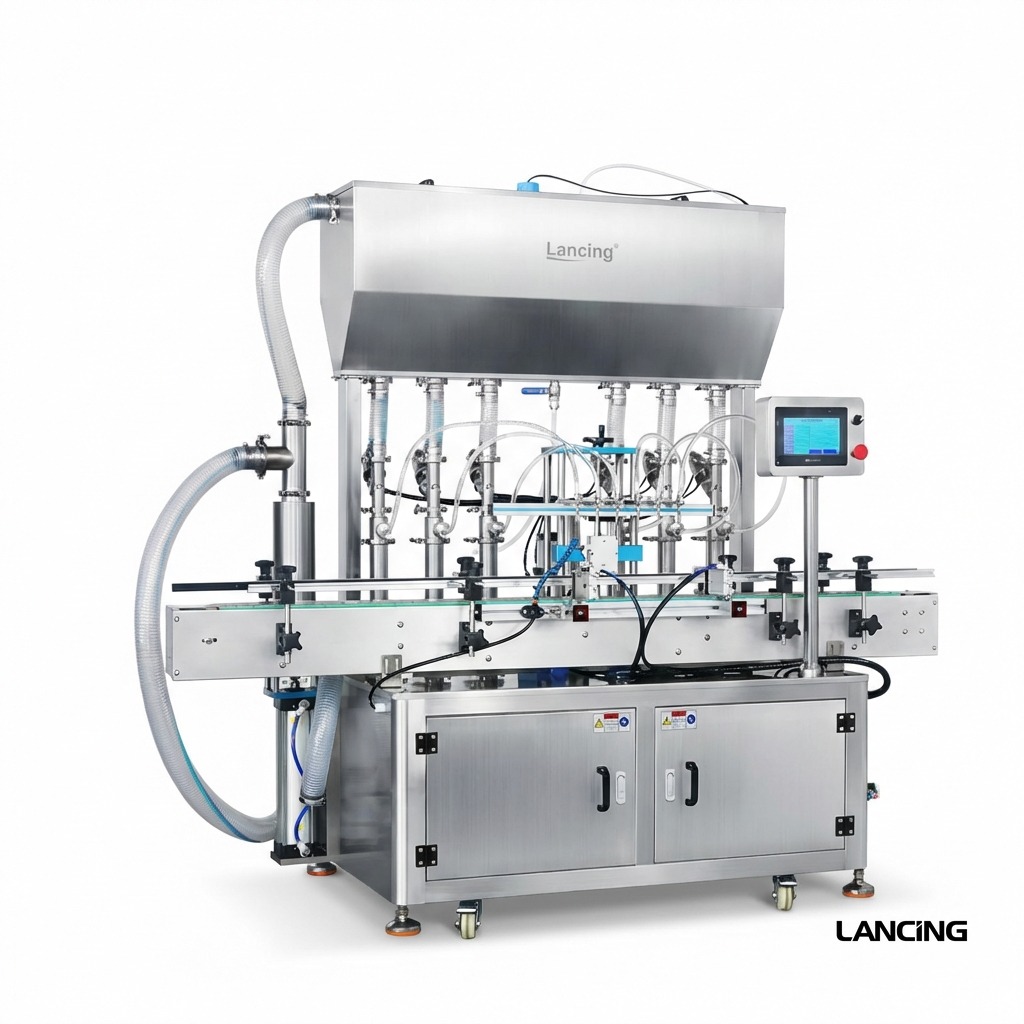
| Four-head automatic piston filler | 5–100 ml through to 1000–5000 ml module options | 4 filling heads; published accuracy ≤ ±1% reference; 0.4–0.7 MPa typical air | HMI, bottle detection, chain conveyor and anti-drip nozzle arrangement for automatic production. |
| LU-KL02S volumetric cup filler | Published 1–500 g reference, customisable; the actual mass depends on bulk density | 10–30 bottles/min; 30 L hopper; 20 mm outlet reference | Measuring-cup route for free-flowing granules. Product flow and density variation must be trialled. |
Piston ranges normally describe alternative cylinder modules. The smallest and largest saleable packs should be checked so the selected module operates in a controllable portion of its stroke. Cup systems similarly need a cup volume that is appropriate for the product and target quantity.
A useful accuracy statement identifies the product, temperature, fill quantity, speed, head, nozzle and measurement method. It should report the distribution of individual fills, not only the mean. Published figures are a starting point for an agreed product trial.
Head count does not determine output on its own. Draw and discharge time, bottle indexing, refill supply, capper capacity, label application, rejects and operator intervention all affect sustained production.
These answers explain the checks that normally need to be completed before a machine configuration can be confirmed.
A piston cylinder has a practical operating window. Selecting a cylinder close to the working dose gives better control than expecting one very large cylinder to cover every format. Final modules are confirmed against the real product and container.
No. Published speeds are reference values and depend on dose, product flow, head count, container indexing, operator work and downstream machinery. A timed trial or line calculation is needed for the project output.
Measure the filled mass from the chosen cup at the expected bulk-density range. Because the cup controls volume, a change in bulk density can change the delivered mass even when the cup setting remains constant.
It includes product drain-down, access to contact parts, cylinder or cup changes, seal and tubing changes, nozzle adjustment, recipe selection, conveyor and guide-rail adjustment, cleaning and a documented restart check.
Head count, dosing module, nozzle, product feed, controls and integration may be configurable, but suitability must be checked before the final scope is agreed.
Send the real product, pack formats and acceptance criteria so the reference configurations can be reduced to a defensible shortlist.
A useful machinery comparison goes beyond manual, semi-automatic or automatic operation. It identifies the physical components that control quantity, product flow, cut-off and container presentation.
The correct format depends on how the dose is measured, how the product reaches the dosing element and how the container is presented.
Defined-volume dosing means that the machine repeats a controlled physical or calculated volume for each fill. A piston displaces product from a cylinder, a cup carries a fixed space of dry product, and some pump systems repeat a controlled movement or measured flow. The delivered quantity still depends on product condition, feed stability, trapped air and the way the fill is verified.
Defined volume describes the measurement principle; it does not remove the need for a real-product trial.
A piston filler measures displacement inside a cylinder, while a pump-based volumetric filler may repeat pump movement, time or measured flow. Piston systems are often considered where positive displacement and controlled handling of viscous product are useful. Pump selection can offer a shorter or simpler product path for suitable liquids. The product, cleaning method and dose range decide which route is stronger.
Compare the routes in the piston versus pump filling guide.
A dry product becomes a weak candidate for cup dosing when it does not flow into and out of the cup consistently, when bulk density changes enough to move the resulting weight outside the buyer’s tolerance, or when pieces bridge, segregate or become damaged. A volumetric cup repeats space rather than mass, so the density envelope must be measured during realistic handling.
Head count should follow a proven single-head dose because adding nozzles does not correct slow suction, unstable feed, foaming, poor cut-off or difficult container handling. Once the real fill cycle is known, the number of heads can be balanced against conveyor pitch, product replenishment, capping capacity, cleaning time and the required sellable output of the whole line.
Use the multi-head balancing guide before accepting a combined result.
Browse question-led engineering guidance · Review piston fillers · Review cup dosing · Plan an automatic line
Provide representative product and packs so the machine format can be matched to the real cycle rather than a catalogue label.
Use these guides to move from a machine category to a testable filling specification.
The slowest necessary stage—product draw, discharge, cut-off, indexing, replenishment or downstream handling—sets the sustained rate. Use the volumetric filling speed guide before comparing head counts.
Check whether the claim describes closeness to target, repeatability, or both, and whether product, dose, head count and measurement method are stated. See accuracy versus repeatability.
Review every wetted part, including hoses, cylinders or pumps, valves, seals, gaskets and nozzles. Use the product-contact materials guide.
A cup filler controls volume. Delivered mass depends on bulk density and how the product settles. Use the bulk-density guide for dry-product trials.
These pages connect generic piston and peristaltic routes to verified first-party model data, while keeping product trials and final quotation conditions explicit.
| Filling route | Additional decision | Evidence to request |
|---|---|---|
| Peristaltic | The tubing assembly is part of the dosing setup. | An identified tube-and-pump combination and repeat checks after replacement. |
| Piston | Cleaning access and quantity adjustment depend on the selected hardware. | The actual cylinder, valve and nozzle route, plus a documented adjustment method. |
| Automatic line | A checkweigher may inspect packs without being authorised to alter the filler. | An interface and acceptance test covering valid data, correction limits and restart behaviour. |
The tubing selection guide, feedback-control guide and cleaning-method comparison explain these decisions without assuming that a feature is included on every model. Record them against the model shortlist before requesting a configuration review.