
Product supply
Confirm that the tank, hopper, pump and pipework can replenish every head without changing pressure or introducing air.
The sustained speed of a volumetric filling machine is the completed pack rate after product draw, discharge, nozzle movement, container indexing, product replenishment and downstream handling are all included. Dose size, viscosity, foam, particles, product temperature, head count and the slowest connected process determine real output, so a catalogue cycle rate should be treated as a reference until the product and pack are timed together.
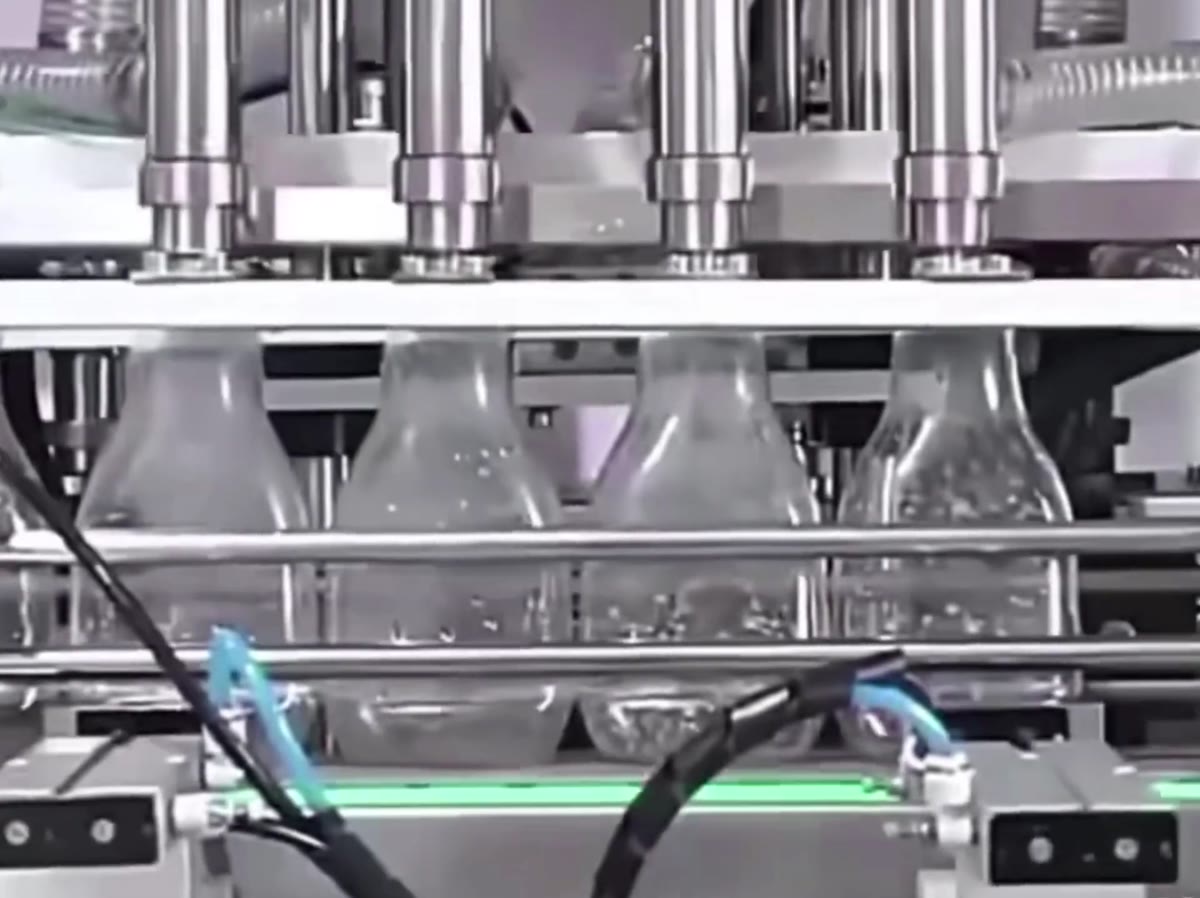
A filler cannot be selected from bottles per minute alone. The machine has to receive product, position the pack, complete the dose cleanly, release the pack and recover for the next cycle without creating foam, drips, rejects or an unstable downstream process.
Each stage can become the limiting step. The strongest speed estimate shows the duration and constraint of every stage rather than multiplying an isolated machine movement by sixty.
| Cycle stage | What can slow it | Evidence to collect |
|---|---|---|
| Product draw or recharge | Viscosity, suction restriction, air leaks, feed pressure, hose length and cylinder stroke | Draw time, hopper level, pressure and product temperature |
| Product discharge | Dose size, nozzle bore, foam, particles, splash and permitted shear | Discharge time, nozzle setting and pack presentation |
| Cut-off and nozzle movement | Drip control, suck-back, diving travel and settling time | Tail length, bottle contamination and movement profile |
| Container indexing | Unstable bottles, narrow necks, gates, guide rails and sensor delays | Index time, stoppages and rejected presentations |
| Downstream release | Capper, labeller, coder, inspection or accumulation capacity | Sustained accepted packs, not filler-only cycles |
More filling heads increase the number of packs completed per fill cycle only when the product supply, container indexing and downstream equipment can support them. If a hopper cannot recharge the cylinders consistently, bottles cannot be presented together or the capper is already the bottleneck, adding heads may increase complexity without increasing sellable output.
Confirm that the tank, hopper, pump and pipework can replenish every head without changing pressure or introducing air.
Check bottle spacing, stability, gating and neck-position tolerance for the complete head group.
Compare filler capacity with capping, labelling, coding, inspection and manual handling.
Yes. Increasing draw or discharge speed can create air pockets, foam, splash, product strings, container contamination or incomplete cut-off. The filler may show a higher cycle count while the line produces more rejects, requires more cleaning or forces the capper and labeller to stop. The useful rate is accepted packs per period, not the fastest mechanical stroke.
Use the intended product, container and production condition, stabilise the feed, then record a sufficiently long steady-state run together with start-up, refill and restart sequences. Separate filler cycle rate from accepted line output and document why any pack was rejected or reworked.
Bottles per hour is packs completed per cycle multiplied by completed cycles per minute and then by sixty. A realistic planning figure applies an allowance for normal stops, product replenishment, rejects and changeovers.
A larger dose requires more product to be drawn and discharged. The limit may also move to the nozzle, hose, valve or product feed, especially with viscous, foaming or particulate products.
For short batches, frequent product changes or unstable containers, a flexible semi-automatic process can produce more useful output over a shift than a more complex line with long setup and cleaning requirements.
Compare the same product, dose, pack, head count, operating state and accepted-output definition. Ask whether the figure is a mechanical maximum, a short demonstration or sustained accepted production.
Send the fill range, product behaviour, container, target output and connected equipment so Lancing can define a useful timed trial.