Lancing UK · Volumetric filling machinery for UK production lines01494 623 015 · sales@lancinguk.com
Measurement evidence

What is the difference between filling accuracy and repeatability?

Filling accuracy describes how close delivered quantities are to the target, while repeatability describes how closely individual fills agree with one another under the same conditions. A process can be highly repeatable but consistently high or low, or average close to target while individual fills vary too widely. Both bias and spread must therefore be reported.

AccuracyRepeatabilityBiasTrial results

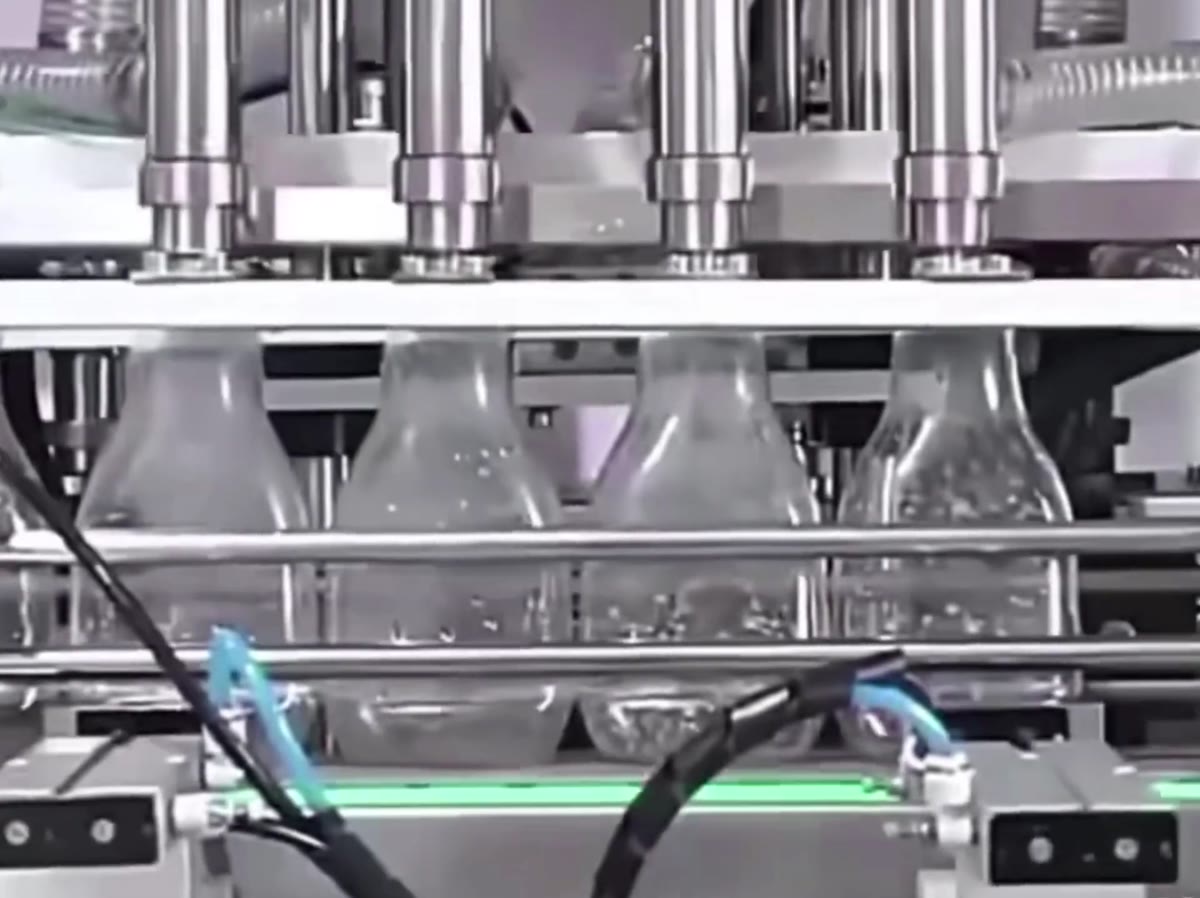
Volumetric filling results used to compare accuracy and repeatability
Direct answer

Accuracy and repeatability answer different questions.

Accuracy asks whether the process is centred on the required quantity. Repeatability asks whether the process produces a tight spread when the product, machine and measurement conditions are held equivalent. A complete trial reports both.

  • Use individual results rather than only a combined average.
  • Separate each filling head and operating state.
  • Record product temperature, density, feed and machine settings.
  • Agree the measurement method before testing begins.
Definitions

How do accuracy, repeatability, bias and spread relate?

TermWhat it describesWhat the result may indicate
TargetThe quantity the process is intended to deliverThe reference for setup and acceptance
BiasThe consistent difference between the process centre and the targetSet-point, calibration, density conversion or measurement issue
RepeatabilityThe spread between fills under equivalent conditionsProduct, feed, valve, seal, air, nozzle or control variation
AccuracyCloseness of results to the required value under the stated methodCombination of process centring and variation
Buyer question

Can a filling process be repeatable but still wrong?

Yes. If every fill is close to the others but consistently above or below the target, the process is repeatable but biased. Correcting the setting may centre it, but the reason for the offset should still be understood—especially where density conversion, tare, product temperature or a head-specific calibration is involved.

Do not judge by the average alone. A combined mean can look acceptable while one head fills high and another fills low. Group results by head, sequence and operating state before making adjustments.
Test design

How should accuracy and repeatability be tested?

Define the product, target quantity, measurement method, sample sequence and operating states before the trial. The test should include steady running and the transitions that matter in production, such as initial priming, product replenishment, a planned stop and restart, and any head or recipe change.

  1. Verify the measuring equipment and tare method.
  2. Stabilise product temperature, feed and machine settings.
  3. Record each result with head identity and sequence position.
  4. Calculate the process centre and the spread between results.
  5. Investigate outliers and repeat the relevant operating state.
Common questions

Questions buyers ask about filling accuracy and repeatability

Is one published percentage enough to approve a filler?

No. The product, dose, speed, number of heads, measurement method and operating condition must be stated. A figure obtained with one liquid cannot prove performance for a different paste, foaming product or particulate application.

Should multi-head results be grouped by filling head?

Yes. Head identity shows whether variation is common to the process or local to one cylinder, valve, seal, hose, nozzle or setting.

Is visual fill height a reliable quantity check?

Not on its own. Container wall thickness, shape and internal volume can make equal quantities appear at different levels. Quantity should be checked with an agreed measurement method.

How many samples are needed?

There is no universal sample count for every risk and production system. The buyer should agree a sampling plan that covers heads, operating states and the applicable quality or legal requirements.

When should the process be rechecked?

Recheck after product, temperature, density, cylinder, valve, seal, nozzle, recipe, speed or feed changes and after maintenance that can affect the dosing path.

What is the most useful supplier evidence?

Individual results with product condition, machine configuration, head identity, settings, measurement method, sample sequence and observed presentation provide more value than a headline percentage alone.

Agree the evidence before the filling trial.

Send the product, pack, target quantity and acceptance method so Lancing can plan a test that reports both centring and variation.