
Fill volume range
A machine should be selected around the lowest and highest required fill volumes.
Accuracy claims only matter when they are considered against the actual product, fill volume and production conditions. This guide explains the main factors that affect volumetric filling repeatability.
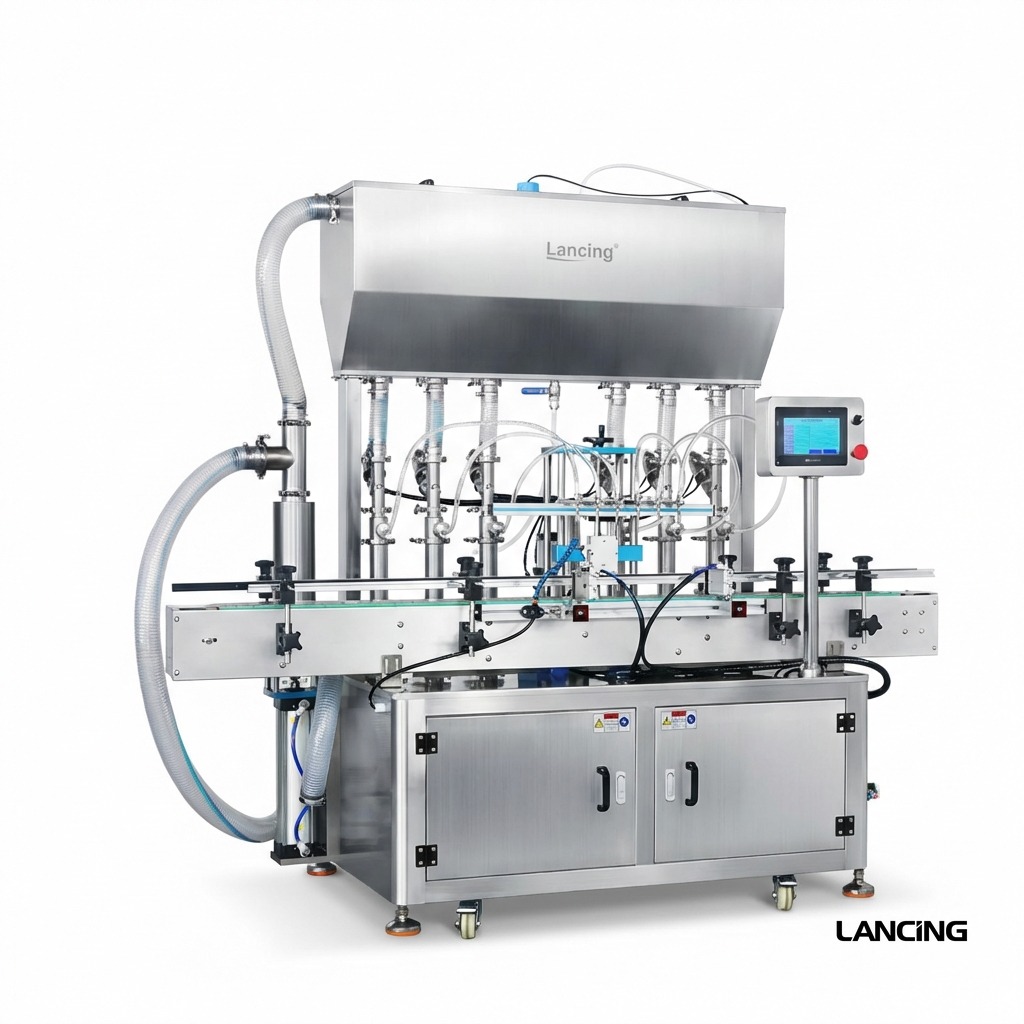
Product viscosity, foam, temperature, nozzle design, speed, operator workflow and container positioning can all affect the delivered fill. The specification should define the real tolerance required for production.
Compare the route against product behaviour, fill range, container format, throughput and any downstream capping or labelling stages.
A machine should be selected around the lowest and highest required fill volumes.
Viscosity, temperature, foam and particles all affect repeatability.
Conveyor speed, container position and nozzle control influence actual results.
For a faster specification, include the product sample or description, fill volume range, container dimensions, cap or lid type, target output and available production space.
Viscosity, flow, temperature, foam, particles and cleaning expectations.
Bottle, jar, tub or pouch details including neck opening and stability.
Target packs per minute or per hour and whether manual loading is acceptable.
Capping, labelling, coding, sealing, inspection and end-of-line handling.
How to choose a volumetric filler by viscosity, fill range, accuracy, throughput, container type and line integration needs.
Read morePiston filling machines for liquids, sauces, creams, gels and viscous pastes. UK advice from Lancing UK.
Read moreServo filling machines for repeatable volumetric filling of sauces, creams, gels, honey, liquids and viscous products.
Read moreCompare volumetric filling and weigh filling for liquids, pastes, powders and granules. Understand when each route is suitable.
Read moreProduct behaviour, filling route, nozzle design, fill speed, container positioning and operator setup all affect accuracy.
Piston filling can be very repeatable for suitable products, but the application should still be tested against the required tolerance.
Yes. Product samples and real containers are the best way to confirm the practical filling route.
Send the product, fill range, container and throughput target. Lancing UK will narrow the most practical filling route before quotation.
Accuracy describes closeness to the agreed target. Repeatability describes the spread between repeated fills. A machine can repeat tightly while remaining consistently high or low, so both the centre and variation of the result set must be checked.
| Measure | What it shows | What it can hide |
|---|---|---|
| Mean delivered quantity | The centre of the sample and any consistent bias from target. | A weak individual head or a wide spread around the mean. |
| Signed error | Whether a result is above or below target. | The overall magnitude of error if positive and negative values cancel. |
| Absolute error | The size of each error regardless of direction. | Whether the process is biased consistently high or low. |
| Range or standard deviation | The spread and stability of repeated fills. | Whether the average itself is correctly centred. |
| Head-specific results | Differences between nozzles, cylinders, valves or settings. | Variation caused by changing product or operating state unless those conditions are recorded. |
Record the product batch and temperature, density or bulk density where relevant, target quantity, container tare, measurement instrument, cylinder or cup, valve, nozzle, machine speed, pressure, head number and operating state. Separate prime, stable running, stop/restart and end-of-batch results.
UK packaged-goods rules distinguish minimum and average systems and place obligations on the packer. The filling machine setting is only one part of the production-control system. Buyers should align sampling, records and legal quantity control with current GOV.UK packaged-goods guidance and competent advice.
Use the volumetric filling trial protocol to produce a traceable result set.
Use one defined method to compare individual fills, heads, settings and production conditions.
Accuracy concerns closeness to target; repeatability concerns the spread between fills. The accuracy-versus-repeatability guide shows why both matter.
Subtract tare from gross mass and divide net product mass by verified density. Use the fill-volume-by-weight calculator and retain the measurement conditions.
Temperature can change viscosity, density, air and cut-off. See how product temperature affects filling.
Do not correct the set point until tare, density, product condition, feed stability, prime state and measurement equipment have been checked.
Begin by separating a persistent shift in the average from changing spread, isolated outliers and packaging-weight changes. A controlled setting adjustment may address a stable offset; it will not repair an intermittent leak, variable product feed or unreliable measurement. Compare head-specific results and operating states before deciding which variable to change.
Use checkweigher feedback principles when a downstream weight is intended to influence dosing. Where tubing has changed, use the peristaltic replacement checks instead of treating the previous calibration as proof. Keep the raw results and the intervention history in the trial record.