
Measurement method
Record the instrument, resolution, tare method, density conversion if used and the person completing the measurement.
A useful filling trial must test the intended product, dose and container under the conditions that can change the result. One slow demonstration fill is not enough to approve a production process.
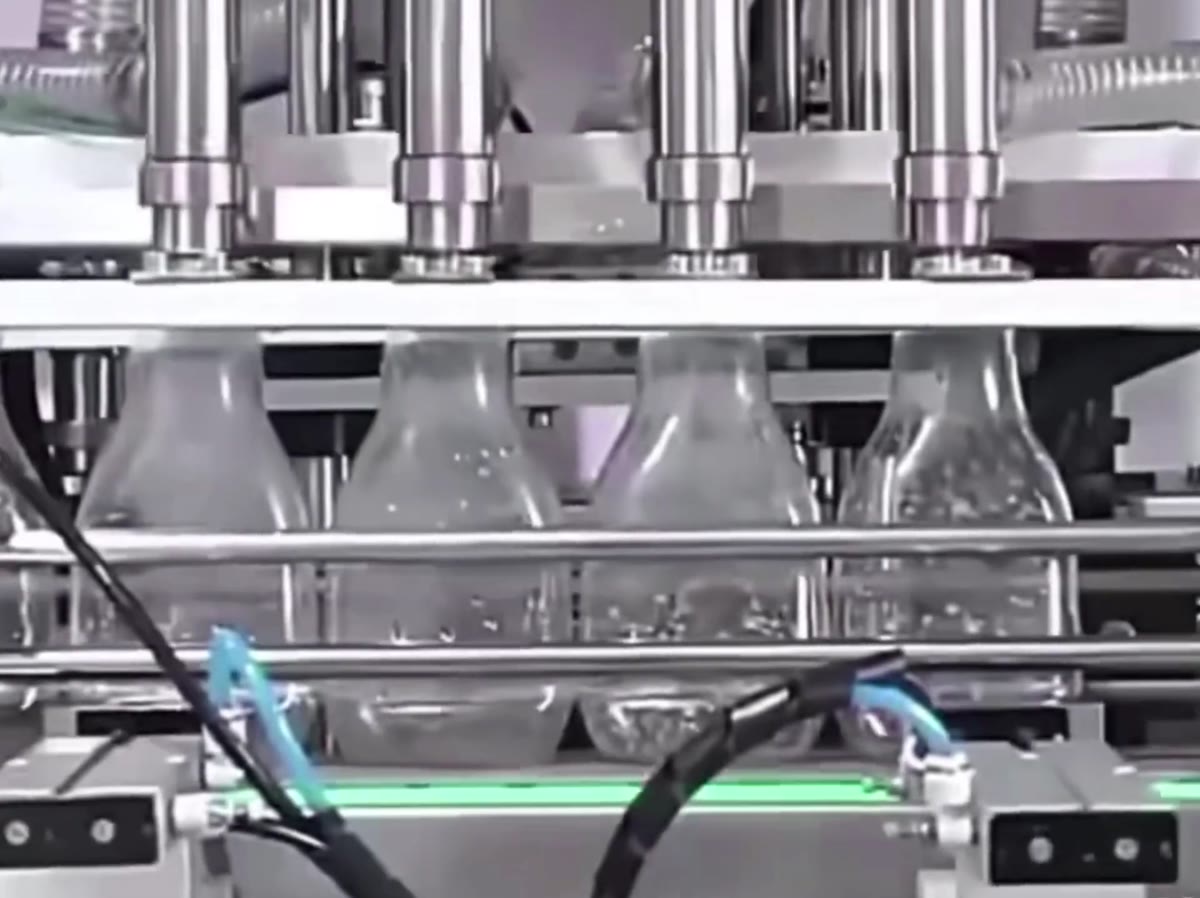
The useful decision is not the label on the machine. It is whether the product, dose, pack, utilities and acceptance method can be controlled together under realistic production conditions.
| Trial state | What it can reveal | Evidence to retain |
|---|---|---|
| Prime and first fills | Air removal, incomplete cylinder refill, delayed valve action and initial quantity error. | First fills identified separately rather than hidden in a combined average. |
| Stable running | Repeatability, head-to-head balance, product replenishment and cycle interaction. | Individual fill results by head with settings and product condition. |
| Planned stop and restart | Drip, settling, temperature change, pressure recovery and first-fill behaviour. | Stop duration, restart sequence and any rejected or corrected fills. |
| Lowest and highest dose | Adjustment resolution, refill time, nozzle cut-off and practical cylinder range. | Separate result sets at both operating boundaries. |
| Product or format change | Retained product, cleaning access, change parts and recipe-transfer risks. | Changeover steps, time, verification method and first acceptable fill. |
Retain every individual result. Calculate signed error from target to show bias, absolute error to show magnitude, the mean to show the centre of the result set, and the range or sample standard deviation to show spread. Do not allow a good combined average to conceal a weak head or unstable restart state.
Record the instrument, resolution, tare method, density conversion if used and the person completing the measurement.
Record cylinder or cup, stroke or setting, valve, nozzle, speed, pressure, recipe and head identification.
Record batch, temperature, mixing, settling time, hopper level and any visible aeration or separation.
The acceptance record should state the product and pack tested, the machine configuration, the target and tolerance, sampling method, operating states, results, exclusions and any actions still open. If packaged quantity law applies to the buyer's operation, the buyer should align the production-control plan with current UK requirements and competent advice rather than treating the machine setting alone as legal compliance.
Use the accuracy and repeatability guide, product-testing page and FAT and SAT guide.
These answers define the evidence normally needed before Lancing can confirm a machine configuration.
Enough is needed for priming, repeated fills at the required doses, stops and restarts, any product boundary condition, and a realistic cleaning observation. The amount depends on the machine and dose.
Yes. Head-specific results prevent a combined average from hiding a head that requires separate adjustment or maintenance.
Settling, drip, pressure recovery, air and product temperature can make the first fills after a pause different from steady running.
No. A trial supports method and configuration selection. Final throughput depends on the complete machine, container handling, upstream and downstream stages, and agreed acceptance testing.
Send the product, pack, dose range, tolerance and intended operating conditions so Lancing can define a representative sample and result plan.
Agree scales or volumetric instruments, tare, density, temperature and records. The weight-to-volume guide provides a worksheet.
Retain individual, head-specific results and compare the process centre with variation. See accuracy versus repeatability.
Include the normal production range and any difficult startup, cooling or holding condition. Use the temperature guide.
Record accepted packs and the limiting stage, not only mechanical filler cycles. Use the speed guide.