
Why it matters
Testing reduces the risk of discovering product or container issues only after the machine reaches site.
A practical FAT should check product filling, container handling, accuracy, repeatability, controls, safety and downstream integration before shipment or commissioning.
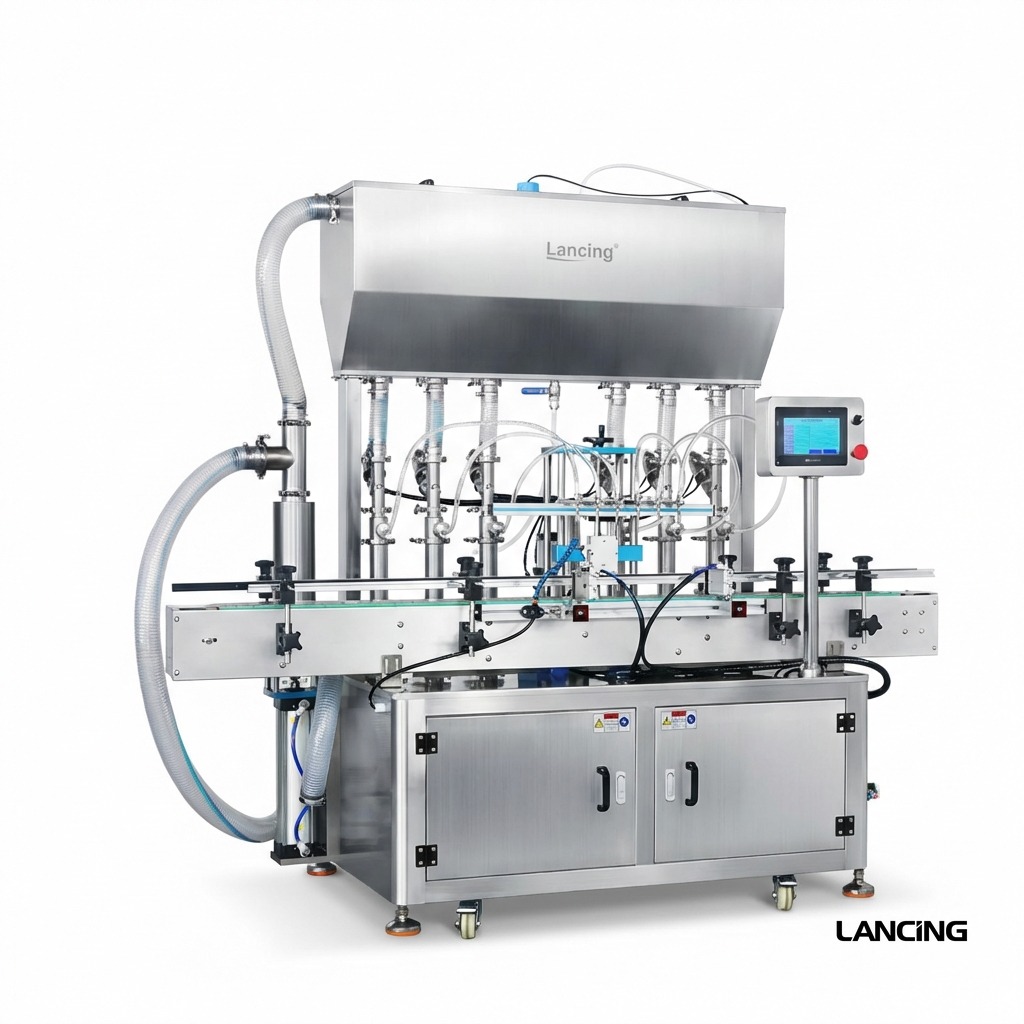
These are the main points to check before asking for a quote. They help avoid a filler that looks suitable on a catalogue page but fails in real production.
These points help Lancing UK shortlist the right piston, pump, cup, semi-automatic or automatic filling route.
Testing reduces the risk of discovering product or container issues only after the machine reaches site.
Provide real product and containers where possible so the machine can be checked against production conditions.
These related pages cover adjacent product types, machine formats and line-integration decisions.
Factory Acceptance Testing checks whether the machine performs against agreed requirements before delivery or commissioning.
Where possible, yes, because product viscosity, foam and particles affect filling performance.
Fill accuracy, repeatability, speed, drip, splash, container handling and safety operation should be reviewed.
Yes, if the machine is part of an integrated line.
Send your product, fill volume, container, throughput target and any downstream equipment needed. Lancing UK will narrow the most practical filling route before quotation.
| Acceptance area | Factory evidence | Site evidence |
|---|---|---|
| Machine configuration | Heads, cylinder or module, valves, nozzles, controls, guards and documented options. | Installed layout, utilities, interfaces and as-installed configuration. |
| Delivered quantity | Agreed samples using available product or approved simulant and measurement method. | Production product, containers, operating conditions and site quantity-control method. |
| Line states | Prime, stable run, planned stop, restart, starvation and downstream block where practical. | Connected upstream/downstream response and site recovery procedure. |
| Changeover and cleaning | Demonstration of agreed parts, access, settings and documentation. | Site method, tools, services, verification and operator competence. |
| Documentation | Manuals, drawings, component information and open-item record. | Training record, completed checks, defects, actions and sign-off authority. |
Use the trial protocol and technical glossary to keep terms and measurements consistent.
A demonstration is incomplete as acceptance evidence when it does not identify the product, pack, configuration, operating state and criterion being assessed. A normal-running video may show the mechanism but not restart, changeover or fault handling. Define which requirements it proves and which still require measured or witnessed evidence.
| Function | Evidence to retain |
|---|---|
| Tubing replacement | Assembly identity, channel results and any recalibration before release. |
| Checkweigher feedback | Command, acknowledgement, delay, eligible packs and behaviour on invalid data. |
| Cleaning route | Defined circulated and removed parts, exposure limits and application-specific results. |
| Handover | The approved recipe, drawings, parts list, outstanding actions and responsible parties. |
Use tube replacement, feedback and cleaning-route guidance to prepare the challenge list. Send Lancing the criteria before the trial so evidence is designed in rather than reconstructed afterwards.