
Defined volume
A quantity established by a known chamber, displacement or calibrated delivery cycle rather than by observing the final fill level.
Use these definitions when preparing a user requirement, comparing quotations or agreeing a product trial. A shared vocabulary helps prevent a machine setting, performance condition or acceptance method from being misunderstood.
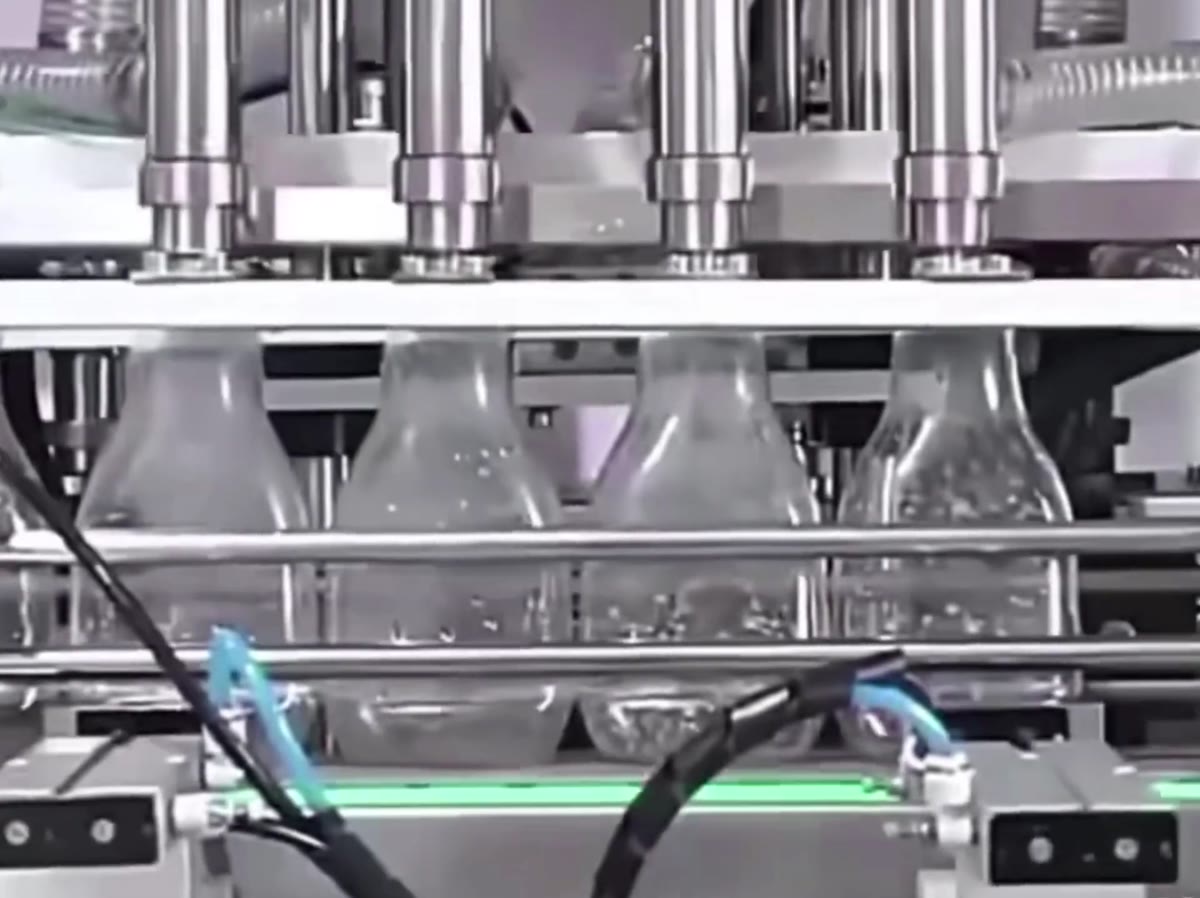
The useful decision is not the label on the machine. It is whether the product, dose, pack, utilities and acceptance method can be controlled together under realistic production conditions.
A quantity established by a known chamber, displacement or calibrated delivery cycle rather than by observing the final fill level.
The chamber in which a piston moves to draw in and discharge product. Cylinder area and stroke determine nominal displacement.
The distance travelled by the piston or actuator during a cycle. In a piston filler, changing the working stroke changes displaced volume within the usable cylinder range.
Dry product fills a fixed or adjustable cup and the measured cup contents are discharged. Delivered mass depends on both cup volume and bulk density.
The controlled relationship between a machine setting and the measured delivered quantity under recorded product and operating conditions.
A physical component changed for another dose, product or pack, such as a cylinder, cup, nozzle, seal, gate, guide or container support.
| Term | Practical meaning |
|---|---|
| Accuracy | How close a measured result is to the agreed target under stated conditions. |
| Repeatability | How closely repeated fills agree with one another when the method and conditions are held constant. |
| Signed error | Delivered quantity minus target. The sign shows whether the result is above or below target. |
| Absolute error | The size of the error without its positive or negative sign. |
| Range | Highest result minus lowest result in the sample. |
| Sample standard deviation | A statistical measure of spread within a sample of individual fills. |
| Head-to-head balance | Comparison of results from each filling head so one weak head is not hidden by the combined average. |
| Overfill or giveaway | Product delivered above the target or required control point, creating avoidable material cost. |
A controlled reverse movement or pressure reduction used to pull product back from the nozzle after filling. Excessive suck-back can draw air or disturb the next dose.
A nozzle with a mechanical closure at or near the outlet to improve cut-off for products that drip or string.
A nozzle that enters or follows the container during filling to control splash, foam or product placement.
A one-way valve opened by pressure differential to direct suction and discharge flow.
A rotating port arrangement that alternately connects the cylinder to the inlet and outlet path.
Mass per unit bulk volume of a powder or granule, including the spaces between particles. It controls the mass delivered by a volumetric cup.
User Requirement Specification: the buyer's controlled description of products, packs, process, output, utilities, safety, documentation and acceptance needs.
Factory Acceptance Test: agreed checks completed before dispatch using the available machine, product or simulant, containers and test method.
Site Acceptance Test: agreed checks after installation using the site utilities, production environment and connected equipment.
A defined operating condition such as prime, steady running, starvation, downstream blockage, planned stop or restart.
Use the glossary with the buyer guide, trial protocol and acceptance-testing guide.
These answers define the evidence normally needed before Lancing can confirm a machine configuration.
No. A machine can repeat closely but remain consistently above or below target. Both the centre and spread of the results matter.
No. It measures a volume. The delivered mass changes when the product bulk density changes.
No. It is one cut-off tool. The correct setting depends on product stringing, nozzle design, air risk and the next filling cycle.
FAT is completed before dispatch at the supplier or build location; SAT confirms agreed functions after installation with site utilities and connected equipment.
Send the product, dose, pack and acceptance terminology used in your project so Lancing can align the quotation and trial record.