
Holding
Define how long the product remains in the tank or hopper and whether temperature drifts during a batch.
Product temperature affects volumetric filling because it can change viscosity, density, foam, particle suspension, suction behaviour and cut-off. A machine tested with a warm, free-flowing sample may behave differently when production starts with a colder or more aerated batch. The operating temperature range should therefore be stated and trialled at the filling point, not inferred from room temperature.
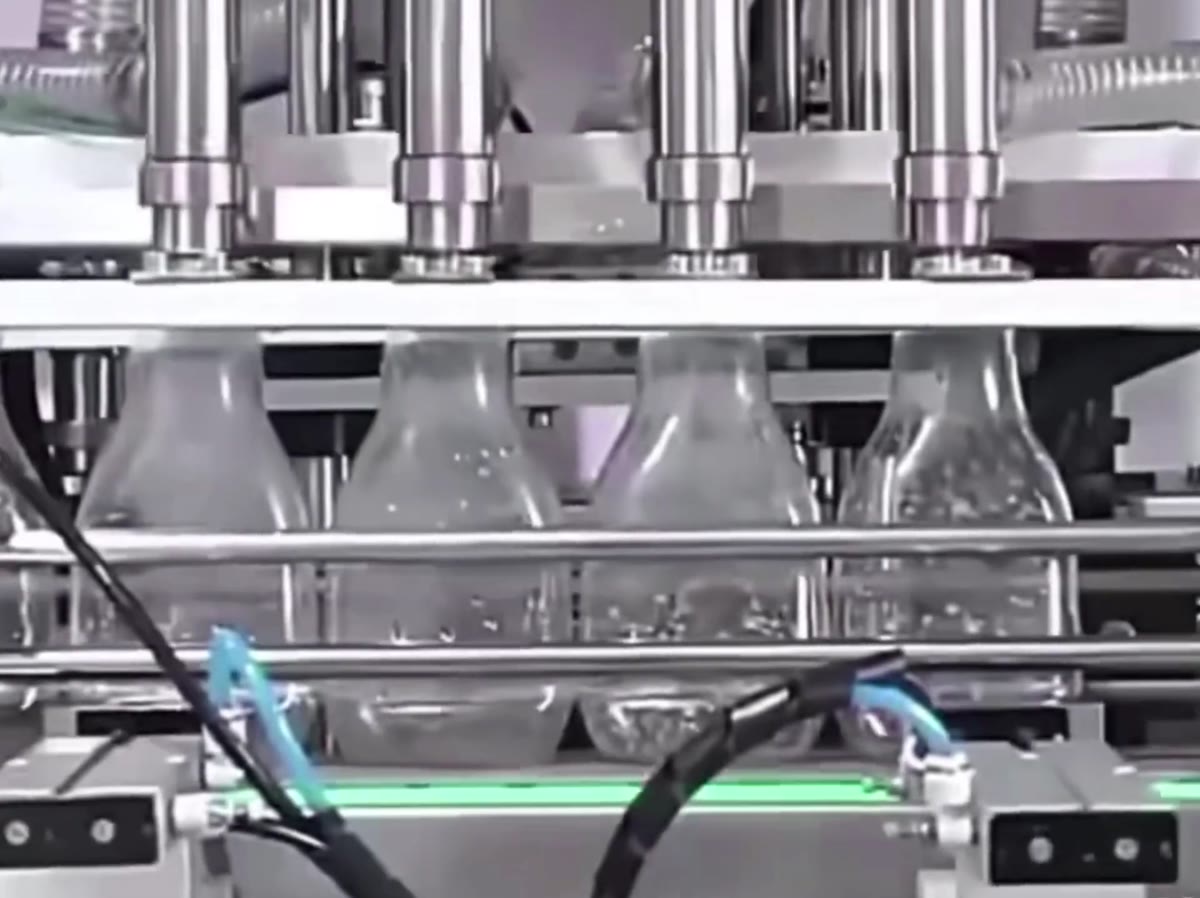
As a product warms or cools, its resistance to flow, density and tendency to foam or string may change. That can alter cylinder recharge, pump load, nozzle cut-off, calculated volume by weight and the time required for a clean fill.
| Product property | Possible filling effect | Evidence to retain |
|---|---|---|
| Viscosity | Changes draw time, discharge pressure, stringing and cycle rate | Temperature at tank, feed and nozzle |
| Density | Changes mass delivered by a fixed volume and weight-to-volume checks | Density method, batch and temperature |
| Foam and entrained air | Changes apparent fill level, density and cut-off behaviour | Mixing state, dwell time and visual evidence |
| Particle suspension | Changes distribution, valve passage and dose composition | Agitation, settling time and sample sequence |
| Product setting or crystallisation | Can restrict hoses, valves or nozzles during stops | Stop duration, restart result and cleaning method |
Yes. The trial should represent the temperature at which the product reaches the filling valve and nozzle, including the expected range over the production run. A laboratory sample left at room temperature may not represent a hot-filled sauce, a cold cream or product that cools while waiting in a hopper.
They may be considered when the product must remain inside a defined condition to flow, stay homogeneous or avoid setting. The scope can include a jacketed hopper or tank, insulated or heated transfer path, agitation and controlled restart procedures. Suitability depends on the product, cleaning method, safe operating limits and the buyer’s process risk assessment.
Define how long the product remains in the tank or hopper and whether temperature drifts during a batch.
Check heat loss, pressure, hose length, pump shear and any low-flow sections.
Specify what happens after a stop, including recirculation, rewarming, remixing and first-fill checks.
Not reliably. Flow, density, foam, particle distribution and container behaviour can all differ at the intended fill temperature.
Cold product may recharge the dosing chamber more slowly, create different pressure and cut off differently. The production procedure should define warm-up and acceptance checks.
It can, because density may change. Use a density value measured or verified for the stated temperature and product condition.
Provide product temperature at filling, expected minimum and maximum, holding time, heating or cooling method, transfer distance, stop behaviour and cleaning temperature.
Yes. The liquid phase can become thicker or thinner, particles may settle differently and the valve or nozzle may see a different mixture through the run.
Record temperature at the relevant process points, time, batch condition, machine settings, cycle rate, individual quantities and observed foam, stringing, settling or restart effects.
Lancing can only compare filling routes accurately when the product is assessed in the condition it will reach the nozzle.