
Control objective
Define whether the system maintains hopper level, supplies on demand, recirculates product or transfers complete batches. Each objective creates different pressure and stop conditions.
A volumetric filler should receive product in a repeatable condition with enough supply to complete every suction or dosing cycle without starvation, uncontrolled pressure or air intake. The correct route may be a local hopper, elevated vessel, IBC connection or controlled transfer pump.
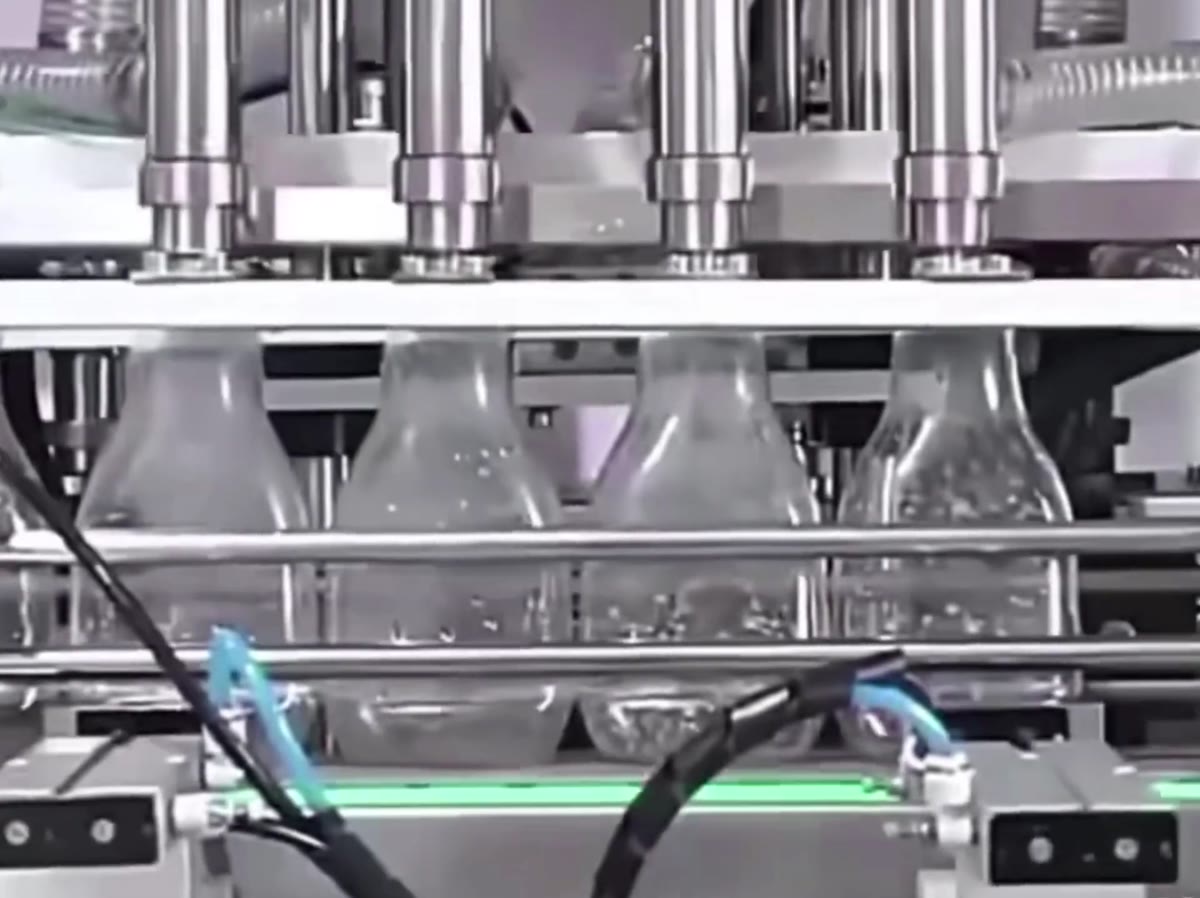
The piston, pump or valve can repeat its command only if product is available under controlled conditions. Product supply should prevent empty suction, uncontrolled head-pressure changes, avoidable aeration and gradual separation while allowing safe replenishment and cleaning.
Hopper level and feed pressure can change refill time, inlet pressure, air intake and the way product enters a cylinder or pump. A low level may form a vortex or expose the inlet; a high or pumped pressure may force product through a valve differently. The trial should represent the full normal level range rather than maintaining one ideal demonstration condition.
| Supply route | Main variable | Trial check |
|---|---|---|
| Local hopper | Level, vortexing, settling and refill disturbance | Run from normal high level to the defined refill point |
| Elevated tank | Static head as the vessel level changes | Compare high and low approved vessel levels |
| IBC or remote vessel | Pipe restriction, suction lift and changeover between containers | Test the longest route and normal connection method |
| Transfer pump | Pressure pulses, control response, air and product shear | Record inlet pressure or control state through the fill cycle |
A transfer pump or level control may be needed when the production vessel is remote, the product will not reach the filler reliably by gravity, manual replenishment would interrupt the cycle or a stable local level is required. The pump and sensor must be selected around product viscosity, particles, shear, cleaning and the filler inlet rather than added as an independent accessory.
Define whether the system maintains hopper level, supplies on demand, recirculates product or transfers complete batches. Each objective creates different pressure and stop conditions.
Agree what happens on low level, pump fault, blocked pipe, empty IBC or overfill alarm so the filler cannot continue with an uncontrolled supply.
Record vessel and hopper level, product temperature, pump or valve state, pipe route, refill timing, visible air, filler suction time, cycle interruptions and the resulting fills. Include replenishment and low-level operation. The record should show whether a change in delivered quantity follows a change in supply condition and whether the feed system recovers cleanly after a stop.
A sample delivered in a small open bucket may behave differently from production product supplied through a long hose, transfer pump, heated vessel or agitated hopper. Include a sketch, photographs or layout dimensions so the trial can represent the intended feed arrangement.
Send the vessel, pipe route, level range, product condition and replenishment method so Lancing can assess feed stability as part of the machine specification.