
Product condition
Record temperature, aeration, particle distribution, batch preparation and any dwell time.
Volumetric fill quantities vary when the machine repeats its setting but the product, feed, valve, nozzle, air content, operating state or measurement condition does not remain equivalent. The pattern in the results is the fastest route to the likely cause.
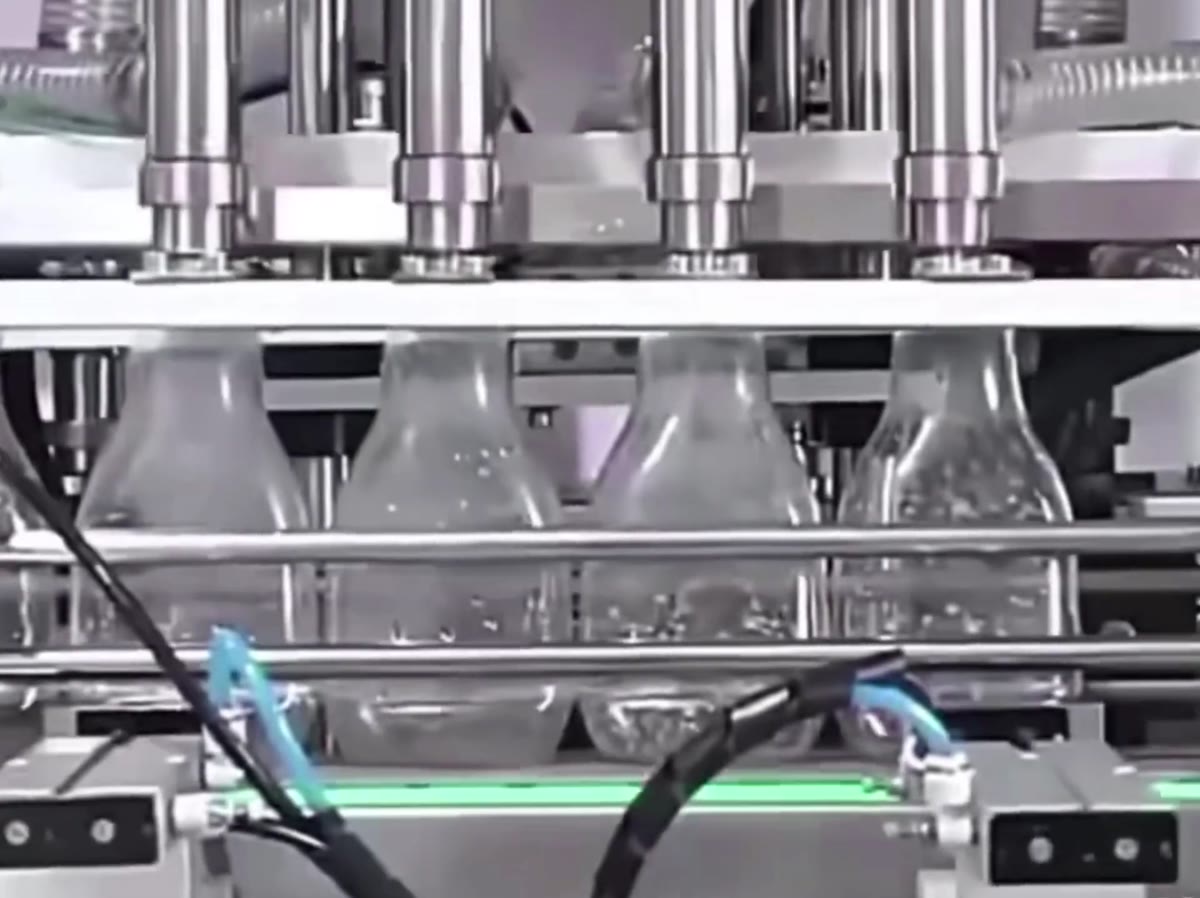
A consistent offset from target points to a different cause from random scatter, one weak filling head or only the first packs after a stop. Adjusting the volume setting before identifying that pattern can hide the symptom without removing the source of variation.
A repeated pattern narrows the investigation. If every fill is close together but displaced from target, the process is repeatable but set or measured incorrectly. If values scatter without a stable centre, look for changing product or feed conditions. If one head differs, isolate that head. If only transition packs differ, test the start, stop and restart sequence.
| Observed pattern | First area to investigate | Evidence to retain |
|---|---|---|
| All fills consistently high or low | Set point, calibration, density conversion, tare or measurement method | Target, individual results, test instrument and product condition |
| Random high and low fills | Air, viscosity, hopper level, suction, valve sealing or nozzle cut-off | Time sequence, product state and machine settings |
| One head differs from the others | Head-specific cylinder, seal, valve, hose, nozzle or recipe offset | Results grouped by filling head |
| First fills after a stop differ | Prime state, pressure recovery, drain-back, settling or restart timing | Stop duration and first-fill sequence |
Confirm that the product, feed and measurement conditions match the approved process before correcting the set point. Check product temperature, mixing or settling time, hopper or tank level, suction leaks, valve and seal condition, nozzle cut-off, container tare and the measurement instrument. If those inputs changed, a numerical correction may only compensate for a temporary process condition.
Record temperature, aeration, particle distribution, batch preparation and any dwell time.
Check prime state, feed supply, valves, seals, hoses, nozzles and head-specific settings.
Confirm tare, density conversion, instrument resolution and the time between filling and measurement.
Fill variation is primarily a process problem when the machine receives different product or supply conditions from one cycle to the next. Examples include changing viscosity with temperature, air introduced during mixing, falling hopper level, particles settling, unstable pumped feed or inconsistent container measurement. The machine may still need a different configuration, but the investigation must include the production process rather than only mechanical adjustment.
Return the process to a defined condition, repeat the sample sequence and change one variable at a time. This preserves cause-and-effect evidence and prevents several adjustments from producing an apparently good result that cannot be repeated.
Provide head-specific results, product conditions, settings and the point in the run where the deviation appears so Lancing can narrow the investigation.