
How should start-up, priming and restart fills be controlled?
Control start-up and restart fills with a defined priming method, a stated stop condition, a measured first-fill sequence and a clear rule for when normal production may resume. Transition packs should be tested because product pressure, prime state, temperature, air and settling can differ from steady running.
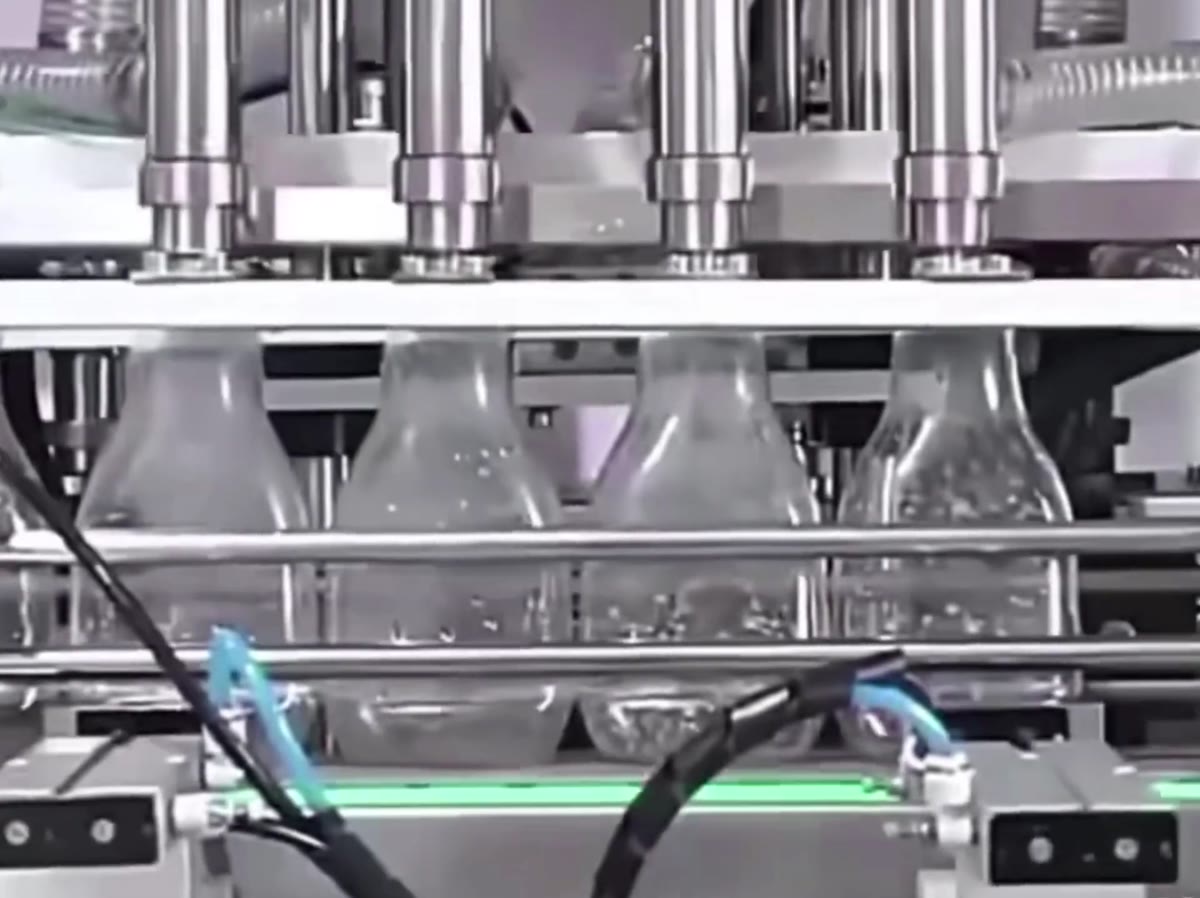
Define transition packs as part of the approved process.
The machine should not rely on an unwritten operator judgement that the first fill “looks right”. Define how the product path is primed, how long the line may stand, which first containers are measured, what result is acceptable and what action follows a failed restart check.
- Differentiate an empty start, short stop and long stop.
- Record whether product drains back, settles, cools or warms.
- Include the filler, feed system, nozzle and downstream line state.
- Retain the restart rule in the operating instruction and acceptance record.
Why can the first fills after a stop differ?
The first fills can differ because the product path loses prime, pressure relaxes, product drains back, air enters, particles settle, temperature changes or the nozzle remains wet. The feed pump and conveyor may also restart in a different sequence from continuous running. The cause can be shared across all heads or limited to one branch, so the first-fill samples must keep their sequence and head identity.
| Stop condition | Possible change | Useful check |
|---|---|---|
| Short planned stop | Pressure relaxation or nozzle drip | Measure the first sequence without reprime unless the approved method requires it |
| Long stop | Temperature change, settling or drain-back | Define reconditioning and prime steps |
| Empty start | Air in product path | Verify complete prime before accepted production |
| Downstream blockage | Filled open packs wait before closure | Check product presentation and restart order |
What should be included in a restart test?
Define the product and line state before the stop, stop duration, actions allowed during the stop, restart command sequence, head identity and the number of consecutive fills measured after restart. Repeat the test at relevant product and feed boundaries. Record both quantity and visible behaviour such as foam, drip, stringing, splash or damaged particles.
- 1
Establish steady production
Confirm the line is producing accepted packs before the stop.
- 2
Create the defined stop
Record duration, hopper or tank level and any product conditioning.
- 3
Restart without hidden intervention
Use only the actions allowed by the proposed operating method.
- 4
Measure transition packs
Retain sample order, head identity and visible observations.
How can a restart rule become a clear operator instruction?
Convert the approved test into an observable sequence: identify the stop type, check product and machine condition, perform the defined prime or purge, run the stated verification fills, measure or inspect them using the approved method and record the result before release. Include the escalation route when the check fails instead of allowing repeated unrecorded adjustment.
Keep the instruction specific to the approved configuration
The rule should name the product or recipe family, machine configuration, stop categories and acceptance method. A generic “discard first bottles” instruction can waste product without proving that the process has returned to control.
Continue the specification in the right order.
Include start-up and restart in the machine trial.
Send the stop conditions, product behaviour, feed route and required verification method so Lancing can build transition checks into the specification.