
Product behaviour
Check viscosity, particles, foam, temperature and whether hot sauces, chutneys, syrups, relish, jams and heated viscous products need gentle handling or positive displacement.
Hot fill sauce filling machine guidance for UK producers filling warm sauces, syrups, chutneys and viscous food products.
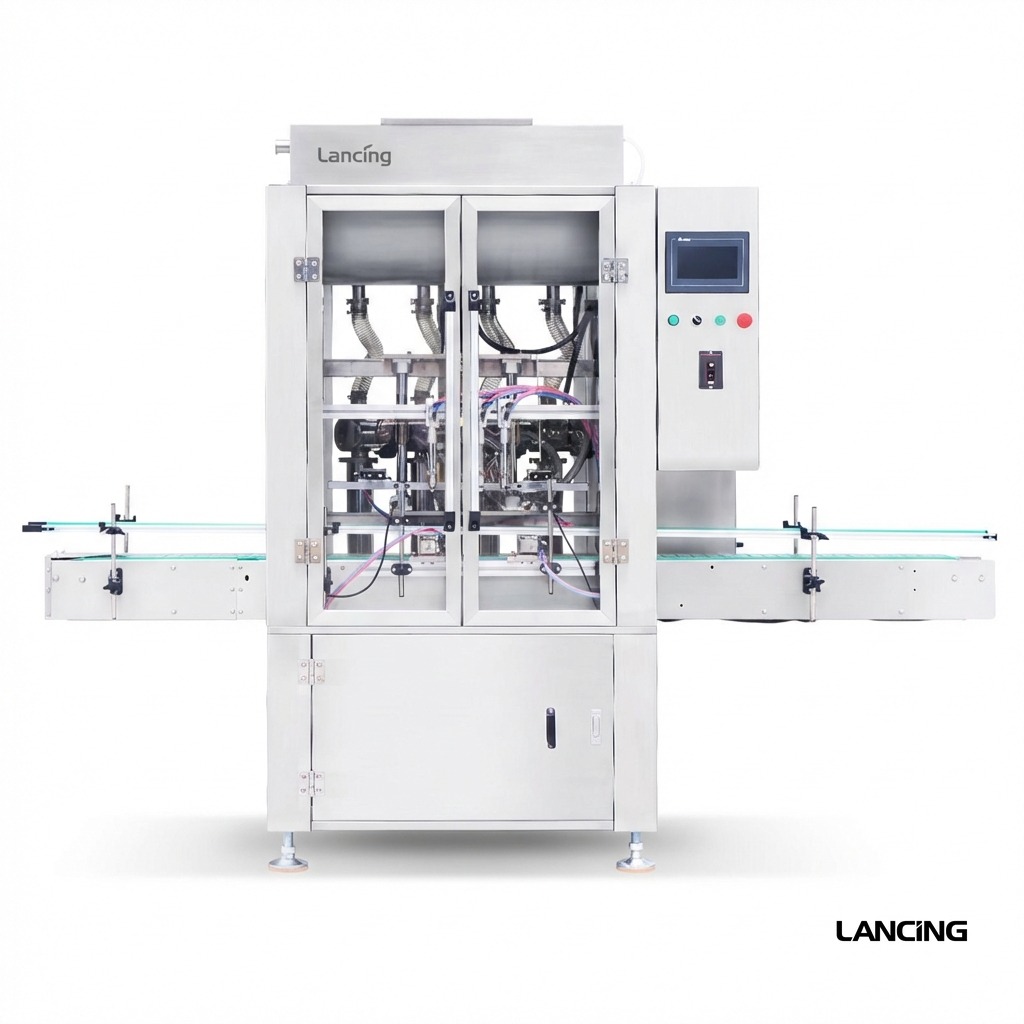
This page is written for food producers filling heated products where temperature changes viscosity. The aim is to help narrow the filling route before money is spent on a machine that may not suit the product, pack format or output target.
These non-negotiable details decide whether piston, pump, cup or integrated filling equipment should be compared.
Check viscosity, particles, foam, temperature and whether hot sauces, chutneys, syrups, relish, jams and heated viscous products need gentle handling or positive displacement.
Confirm the smallest and largest fill size, acceptable tolerance, container headspace and the effect of speed on repeatability.
Review bottle or jar stability, neck opening, conveyor presentation, cap or lid route and whether the machine must integrate downstream.
Plan product-contact access, change parts, washdown expectations and the realistic time needed between products or pack sizes.
Good filling machinery specification starts with the product and container, then works outward to output, controls and line integration.
This page targets food producers filling heated products where temperature changes viscosity and explains how Lancing UK would narrow the practical machine route.
The likely route is temperature-aware filling trials with suitable product contact parts and cut-off nozzles, but the final choice should be based on product samples, containers and output target.
The fastest way to get a useful shortlist is to send product details, container photos, fill volume range, cap/lid details and target throughput.
| Primary buyer need | food producers filling heated products where temperature changes viscosity |
| Relevant products | hot sauces, chutneys, syrups, relish, jams and heated viscous products |
| Likely filling route | temperature-aware filling trials with suitable product contact parts and cut-off nozzles |
| Best next step | Send Lancing UK the product, pack and output details so the machine route can be shortlisted before quotation. |
Temperature can change viscosity, flow, drip behaviour and product separation, so the filler should be assessed at production temperature.
Many hot-fill projects can be assessed for volumetric filling, but product contact materials, safety and cleaning must be reviewed.
Some products may need heated hoppers or pipework to maintain flow, but this depends on viscosity and cooling behaviour.
These pages help compare the machine type, product category and line-integration route around this search.
Send your product, fill volume, container, throughput target and downstream equipment requirement. Lancing UK will help narrow the correct filling route before quotation.
Record the product condition at the points that can change it, especially the holding vessel, transfer path and filling nozzle. See the temperature guide.
Define how cooling, setting, separation or pressure recovery will be controlled, when the product is acceptable to restart and which first fills are checked.
Density can be temperature-dependent. Use a verified value for the agreed condition and the weight-to-volume method.
Review the tank, hose, cylinder or pump, valves, seals and nozzle against both product and cleaning temperature using the materials checklist.