
Piston filling
Often considered for liquids, sauces, gels and creams where measured volume and product feed suit the route.
Piston and peristaltic filling routes can both suit liquid projects, but they solve different problems. The decision is usually driven by viscosity, cleaning route, tubing contact and fill volume.
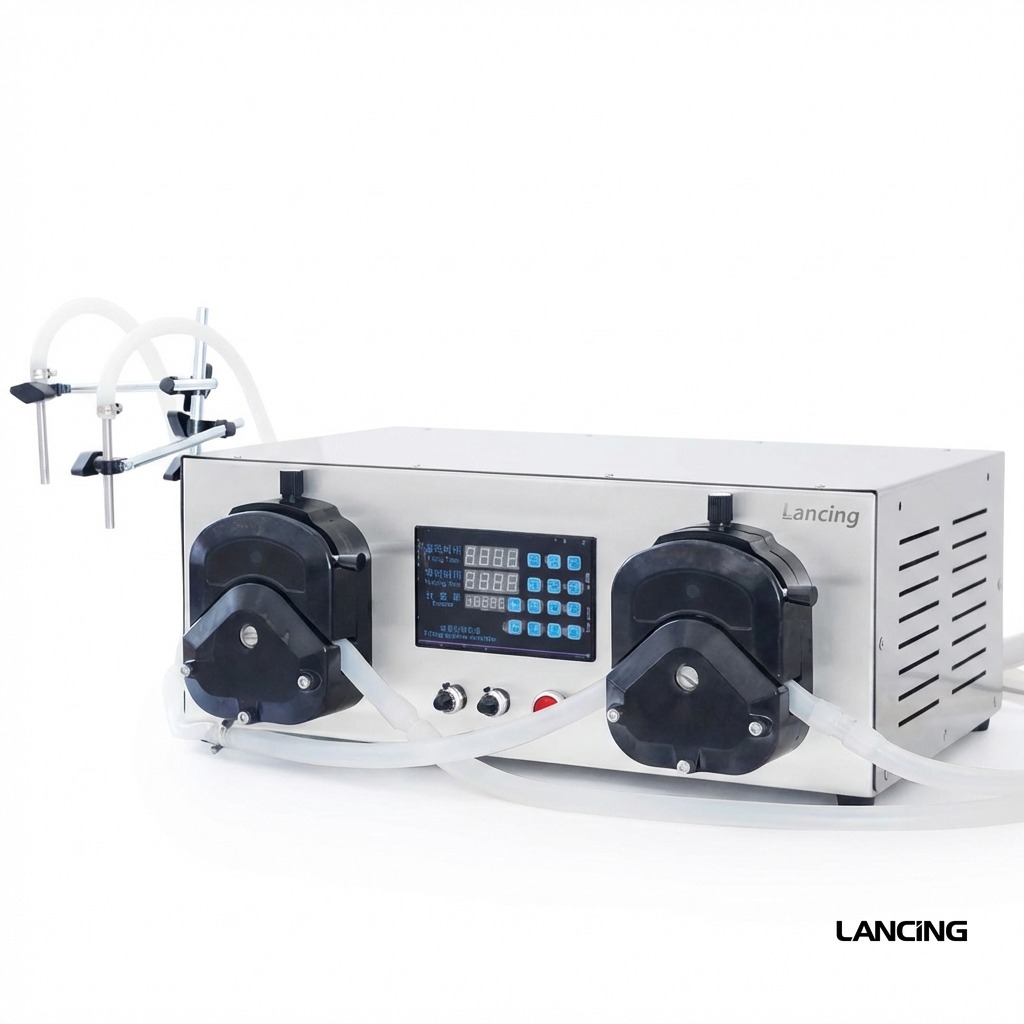
Piston filling uses a measured chamber, while peristaltic filling moves product through tubing. Each route has strengths and limitations.
Use these points to compare realistic filler routes before asking for a formal quote.
Often considered for liquids, sauces, gels and creams where measured volume and product feed suit the route.
Often considered for lower-viscosity liquids where tubing contact or changeover is useful.
Product trials or a detailed review prevent choosing a route that looks right but fills poorly.
These pages cover adjacent product types, filling routes and line-integration decisions.
Piston vs peristaltic filling is normally assessed against the real product, container and throughput target. Viscosity, foam, particulates, fill range and cleaning expectations decide whether piston, pump, peristaltic, cup or another filling route is the best shortlist.
The most useful details are product type, fill volume, container size and photos, target output, available space, utilities and any capping, labelling, coding or conveyor requirements.
Yes. Where suitable, filling can be planned with conveyors, capping, labelling, coding, sealing, accumulation and operator access as part of one production process.
Start with product testing or a detailed product review. The wrong dosing principle can create dripping, foaming, poor accuracy, slow changeover or cleaning problems.
Send your product, fill volume, container, throughput target and any downstream equipment needed. Lancing UK will narrow the most practical filling route before quotation.
Piston and peristaltic systems can both produce repeatable volumetric doses, but they control the product in different ways. The decision should include the full dose range, viscosity, product contact, cleaning, wear items and sustained output.
| Decision factor | Piston filling | Peristaltic filling |
|---|---|---|
| Measuring element | Cylinder displacement set by cylinder size and stroke | Calibrated tube displacement controlled by pump rotation or servo cycle |
| Product contact | Hopper or supply line, valve, cylinder, seals and nozzle | Primarily the replaceable tubing and nozzle connection |
| Viscosity window | Often strong for flowing through highly viscous products after valve/feed review | Limited by tube bore, pump torque, occlusion and the ability to refill the tube consistently |
| Particles | Possible with suitable valve and nozzle clearances, subject to a real-particle trial | Usually more restricted by tubing and pump geometry; must be tested |
| Changeover | Drain, dismantle or clean product-contact components and verify reassembly | Change or clean tubing, prime the path and recalibrate the installed tube |
| Wear and maintenance | Seals, cylinder surfaces, valves and nozzles | Tubing fatigue, flattening, occlusion and roller condition |
| Best evidence | Head-specific fill results, complete cylinder fill, valve passage and nozzle cut-off | Fill results across tube life, priming/restart, flow condition and tube replacement repeatability |
The LU-GY1C lists alternative 5–100 ml to 1000–5000 ml modules, 10–20 bottles/min and ≤ ±0.5% published accuracy under its reference conditions.
The LUDTPP4F lists up to approximately 4000 ml/min per nozzle on water, approximately 30–50 bottles/min and ≤ ±1% on water. A different liquid and tube require a new trial.
The published conditions are not directly comparable performance guarantees. Use them to set up a controlled side-by-side trial with the same product, quantity and pack.
These answers explain the checks that normally need to be completed before a machine configuration can be confirmed.
Peristaltic filling keeps product inside the tube, which can simplify product-path changeover. A piston system has more product-contact components but may be stronger for higher viscosity, larger doses or products that do not suit the tubing.
Neither should be assumed suitable without a trial. A piston valve and nozzle can be configured for compatible particles, while peristaltic tubing and pump geometry usually limit particle size and shape.
Use the same product batch, temperature, target dose, container and acceptance method. Record individual fills, speed, cut-off, product condition, cleaning steps and restart behaviour for both routes.
The tube is a calibrated product-contact component and a wear item. Material, bore, wall thickness, occlusion and replacement interval affect output and repeatability.
Product remains in the hopper, hoses, valve, cylinder and nozzle. Drain-down, dismantling, seal checks, cleaning and reassembly need to be assessed against the buyer’s product-change frequency.
Send the smallest and largest dose, product viscosity, cleaning frequency and tubing constraints for a side-by-side method review.