
Batch size
Daily or weekly production volume determines whether tabletop, semi-auto or compact automatic is realistic.
Small businesses often need flexible filling rather than the fastest automatic line. The right machine should reduce manual filling without making changeover, cleaning or operator handling harder.
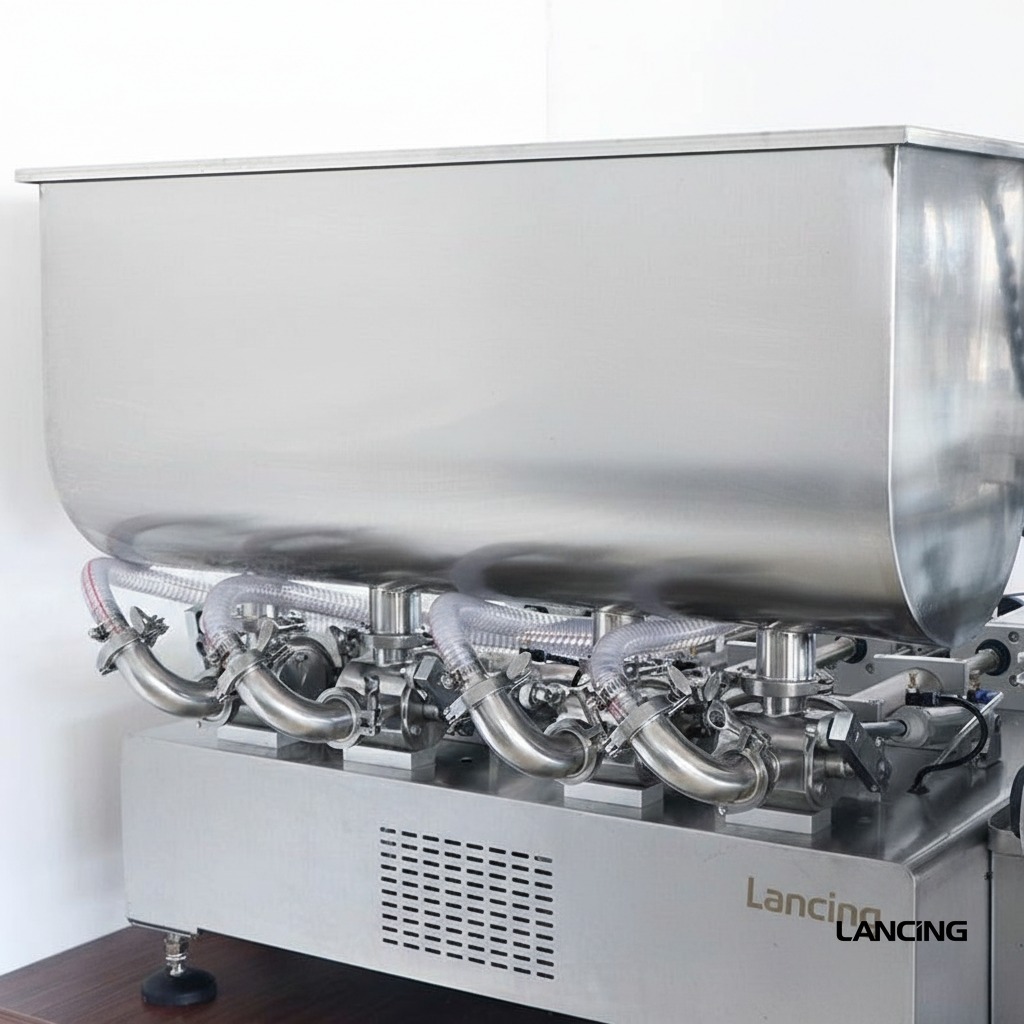
Bench and semi-automatic volumetric fillers can help improve consistency for small batches while keeping the process flexible for multiple products or container sizes.
These checks improve the match between the product, filling method and production layout before quotation.
Daily or weekly production volume determines whether tabletop, semi-auto or compact automatic is realistic.
Multiple products and pack sizes increase the importance of changeover and cleaning.
A practical station layout can matter more than maximum theoretical speed.
Consider whether the filler can support future automation or a wider line.
The strongest enquiry usually compares two or three realistic machine routes against the real production conditions.
Compact machines for lower output and limited footprint.
A flexible route for liquids and pastes where containers are loaded by hand.
Useful where output is growing but space and budget remain controlled.
| Best-fit products | Sauces, oils, creams, lotions, honey, detergents, gels and flowing liquids after testing. |
| Good for | Small batch production, product trials, frequent changeovers and lower-volume operations. |
| Important checks | Compressed air, product feed, cleaning, fill range, container stability and operator safety. |
| Quote information | Current manual process, target batch size, products, fill volumes and container photos. |
Better production details allow Lancing UK to narrow the filler route quickly and avoid unsuitable catalogue-style recommendations.
Viscosity, particles, temperature, foam, shear sensitivity, hygiene and cleaning expectations.
Bottle, jar or container dimensions, neck opening, fill range and closure type.
Target output, available footprint, utilities, operator level and future expansion plans.
Use these related pages to compare machine types, product behaviour and the information needed before quotation.
Often a tabletop or semi-automatic filler is the first step, but the product, fill volume and batch size decide the correct route.
Sometimes, but cleaning, viscosity range, seals and nozzles must be checked for each product.
It can improve consistency and reduce operator fatigue, but the setup must suit the batch size and pack format.
Some compact systems can be planned with future conveyors or downstream equipment in mind.
Send your product, fill volume, container, throughput target and any downstream equipment needed. Lancing UK will narrow the most practical filling route before quotation.