
Cylinder size
The cylinder should match the fill volume range rather than being too small or oversized.
A piston filling machine measures product by drawing it into a cylinder and pushing that measured volume through a nozzle into the container. This guide explains the practical points that affect repeatability.
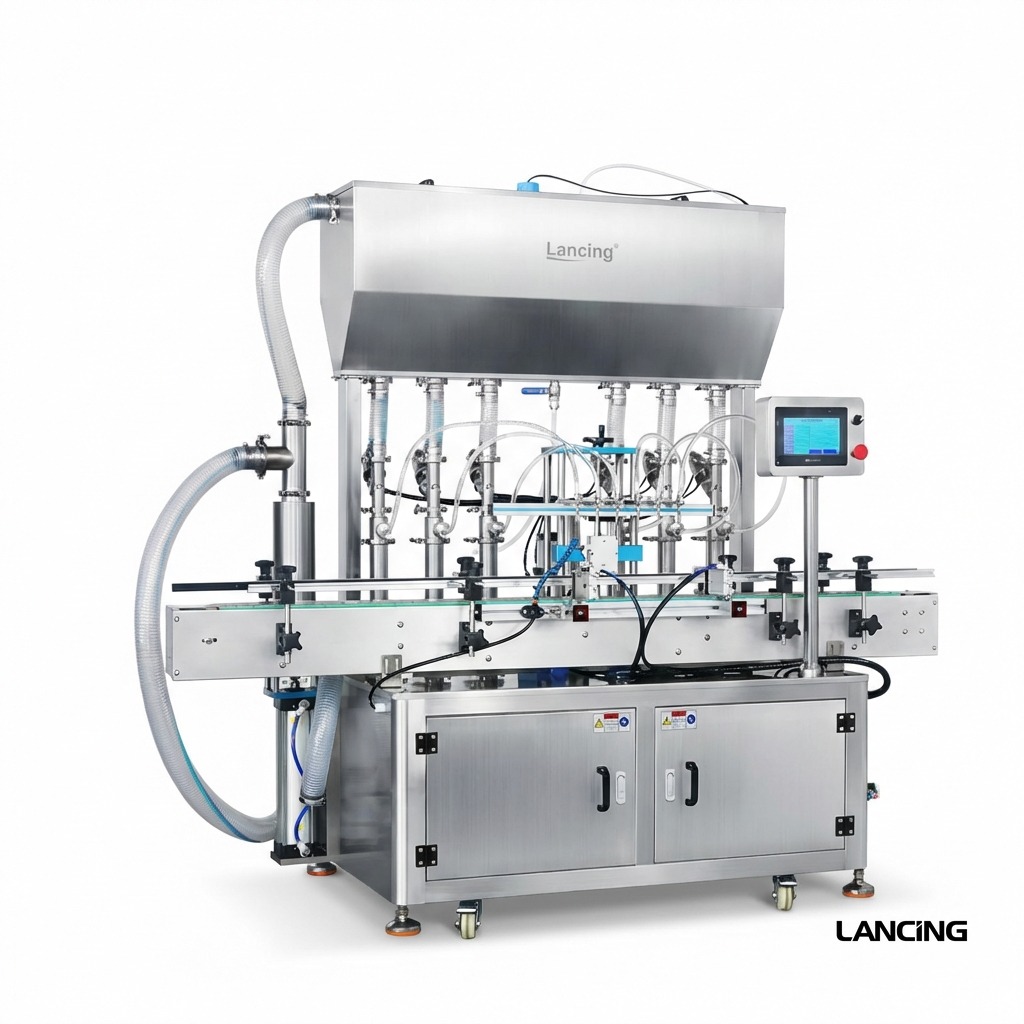
The piston stroke, cylinder size, valve arrangement, product supply and discharge nozzle work together. If one element is mismatched to the product, accuracy and cleanliness can suffer.
These checks improve the match between the product, filling method and production layout before quotation.
The cylinder should match the fill volume range rather than being too small or oversized.
Speed affects air pockets, splash, foaming and product shear.
Valve choice must suit particles, viscosity, cleaning and product compatibility.
Hoppers, pumps or pipework must keep the cylinder fed consistently.
The strongest enquiry usually compares two or three realistic machine routes against the real production conditions.
A common semi-automatic route where compressed air drives the piston.
Useful where recipe control, repeatability and automatic adjustment are important.
For higher output lines where multiple containers are filled each cycle.
| Best-fit products | Sauces, creams, lotions, honey, oils, gels, viscous liquids and many pastes. |
| Accuracy influences | Air in product, inconsistent supply, fill speed, nozzle choice and container presentation. |
| Maintenance points | Seals, product contact parts, valves and cleaning access need routine attention. |
| Quote information | Fill range, viscosity, product temperature, particles, container and output target. |
Better production details allow Lancing UK to narrow the filler route quickly and avoid unsuitable catalogue-style recommendations.
Viscosity, particles, temperature, foam, shear sensitivity, hygiene and cleaning expectations.
Bottle, jar or container dimensions, neck opening, fill range and closure type.
Target output, available footprint, utilities, operator level and future expansion plans.
Use these related pages to compare machine types, product behaviour and the information needed before quotation.
It measures the fill by the volume displaced inside the piston cylinder.
Cylinder size, stroke length and the control system determine the theoretical volume, while product behaviour affects the real repeatability.
Often yes, because positive displacement can move thicker products more reliably than gravity-only systems.
Yes. Servo piston filling can improve recipe control and automatic adjustment on suitable machines.
Send your product, fill volume, container, throughput target and any downstream equipment needed. Lancing UK will narrow the most practical filling route before quotation.