
Piston filling
A measured cylinder route often suited to many viscous liquids, sauces and pastes.
Piston and gear pump filling routes should be compared around the product. Viscosity, shear, particles, cleaning and target fill volume all affect the choice.
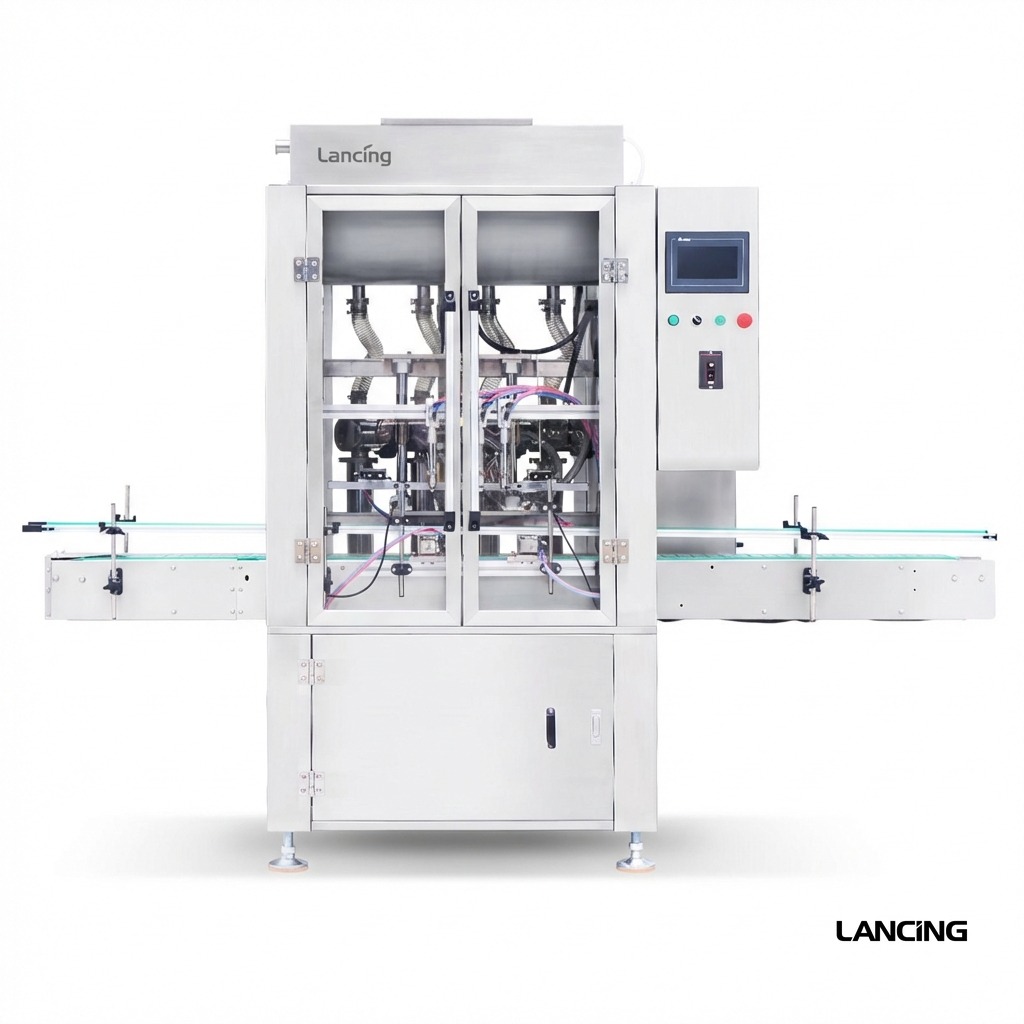
The right route depends on how the product moves through chambers, gears, valves, hoses and nozzles at the required speed.
Use these points to compare realistic filler routes before asking for a formal quote.
A measured cylinder route often suited to many viscous liquids, sauces and pastes.
A pumped route that can suit compatible flowing or semi-viscous products.
Nozzle and product feed design matter as much as the dosing principle.
These pages cover adjacent product types, filling routes and line-integration decisions.
Piston vs gear pump filling is normally assessed against the real product, container and throughput target. Viscosity, foam, particulates, fill range and cleaning expectations decide whether piston, pump, peristaltic, cup or another filling route is the best shortlist.
The most useful details are product type, fill volume, container size and photos, target output, available space, utilities and any capping, labelling, coding or conveyor requirements.
Yes. Where suitable, filling can be planned with conveyors, capping, labelling, coding, sealing, accumulation and operator access as part of one production process.
Start with product testing or a detailed product review. The wrong dosing principle can create dripping, foaming, poor accuracy, slow changeover or cleaning problems.
Send your product, fill volume, container, throughput target and any downstream equipment needed. Lancing UK will narrow the most practical filling route before quotation.
Both methods can meter a volume, but their sensitivity to product feed, pressure, shear and wear differs. A useful trial uses the same product, container, nozzle objective and acceptance method.
| Decision factor | Piston filler | Gear-pump filler |
|---|---|---|
| Dose creation | Discrete cylinder volume displaced on each stroke | Controlled gear rotation or run cycle moves a calibrated quantity |
| Viscosity | Wide practical range where the cylinder can fill completely | Can suit flowing to viscous products, subject to pump torque, slip and supply |
| Pressure and restriction | Discharge force and valve/nozzle sizing affect cut-off and cycle | Back pressure, hose and nozzle restriction can alter load and delivery |
| Particles and shear | Valve and nozzle clearances determine passage and product damage | Gear clearances and shear can restrict unsuitable particles or sensitive textures |
| Wear | Seals, cylinder, valve and nozzle condition | Gear and housing clearance, seals, bearings and product abrasion |
| Changeover | Drain and clean cylinder, valve, seals, feed and nozzle | Drain and clean pump chambers, hoses, valves and nozzle; assess retained volume |
Confirm both methods can deliver the smallest dose without unstable cut-off, excessive cycle time or poor adjustment resolution.
Run the largest dose and intended speed long enough to expose cylinder refill limits, pump slip, product warming, feed starvation or rising back pressure.
Measure retained product, dismantling effort, access, reassembly and the verification needed before the next recipe. Changeover can decide the commercial winner even when both methods fill well.
For broader pump configurations, use Liquid Fillers UK or Paste Fillers UK according to the product. Use this comparison to define the dosing trial, then follow the liquid or paste specialist catalogue that matches the product.
These answers explain the checks that normally need to be completed before a machine configuration can be confirmed.
A controlled pump rotation or timed delivery moves product through the gear chambers. Calibration links the control setting to the actual delivered quantity under the installed product and pressure conditions.
Both can be affected, but pump delivery and flow can be especially sensitive to restriction and pressure. Hose, valve and nozzle sizing should be included in the trial.
Gear clearances and shear can damage or trap unsuitable inclusions. The maximum particle and texture should be tested. A piston or rotor-lobe route may be a stronger comparison depending on the product.
It depends on the design and product. A piston has cylinder, valve, seals and nozzle; a gear pump has pump chambers, hoses and nozzle. Drainability, dismantling and cleaning validation matter more than the method label.
Test the actual viscosity and pressure range. Internal slip can change with viscosity, wear and back pressure, so results should be checked at the production boundaries.
Send the viscosity range, pressure path, particles and clean-down frequency for a controlled piston-versus-pump comparison.