
Good fit
Semi-automatic filling for many liquids and pastes where flexibility matters more than full automation.
A pneumatic piston filling machine uses air actuation to draw and dispense a measured product volume. It can be a practical route for semi-automatic filling when product and accuracy requirements suit the format.
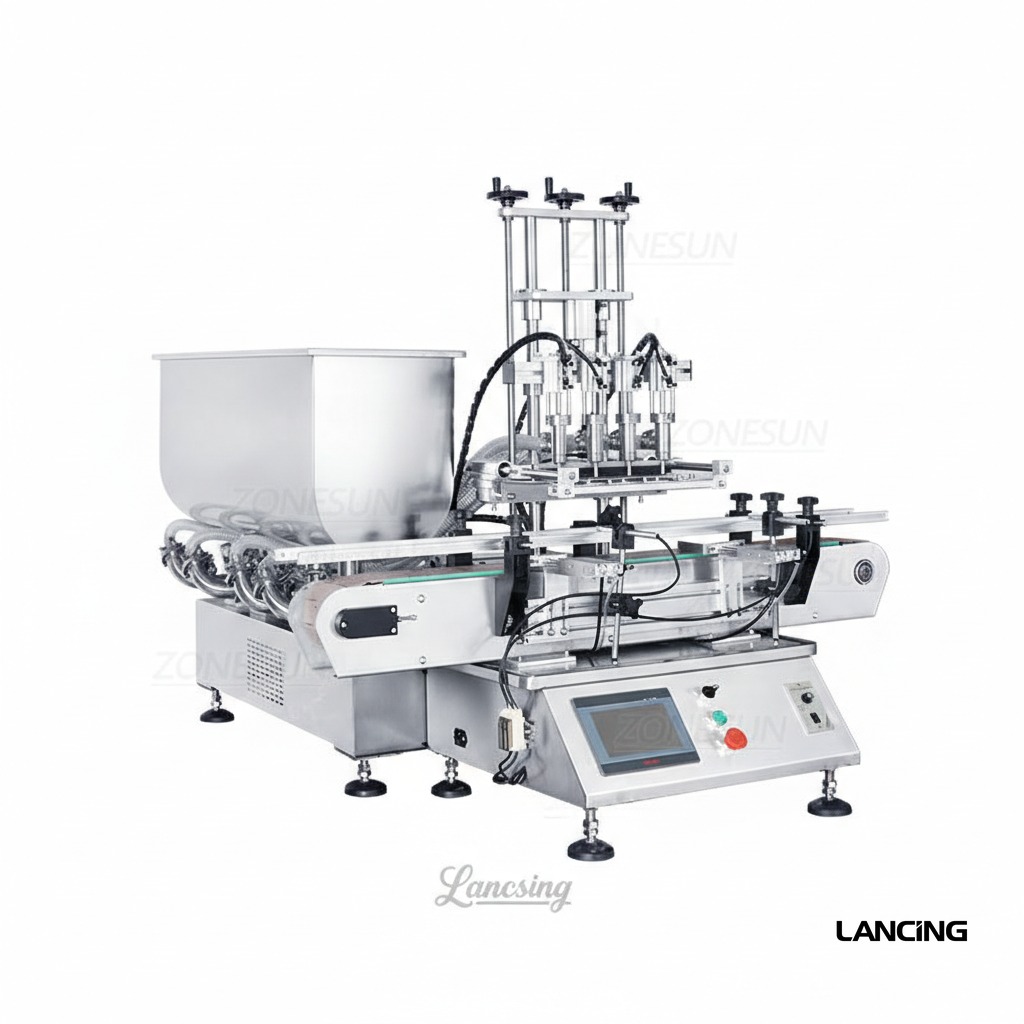
Pneumatic filling can be simple and robust, but it still needs the right cylinder size, valve route, nozzle and product supply for the real product.
Use these points to compare realistic filler routes before asking for a formal quote.
Semi-automatic filling for many liquids and pastes where flexibility matters more than full automation.
Servo control or pump filling may be better where recipe control, higher speed or very specific accuracy is needed.
Product viscosity, fill range and container neck opening are the essential first details.
These pages cover adjacent product types, filling routes and line-integration decisions.
Pneumatic piston filling machine is normally assessed against the real product, container and throughput target. Viscosity, foam, particulates, fill range and cleaning expectations decide whether piston, pump, peristaltic, cup or another filling route is the best shortlist.
The most useful details are product type, fill volume, container size and photos, target output, available space, utilities and any capping, labelling, coding or conveyor requirements.
Yes. Where suitable, filling can be planned with conveyors, capping, labelling, coding, sealing, accumulation and operator access as part of one production process.
Start with product testing or a detailed product review. The wrong dosing principle can create dripping, foaming, poor accuracy, slow changeover or cleaning problems.
Send your product, fill volume, container, throughput target and any downstream equipment needed. Lancing UK will narrow the most practical filling route before quotation.