
Typical routes
Bench or semi-automatic fillers for lower-volume production. Compact inline fillers when bottle presentation and output need improvement. Multi-head fillers for higher throughput and less operator handling.
Small bottles need accurate cut-off, stable handling and quick changeover. The right route depends on bottle size, neck opening, product flow and output target.
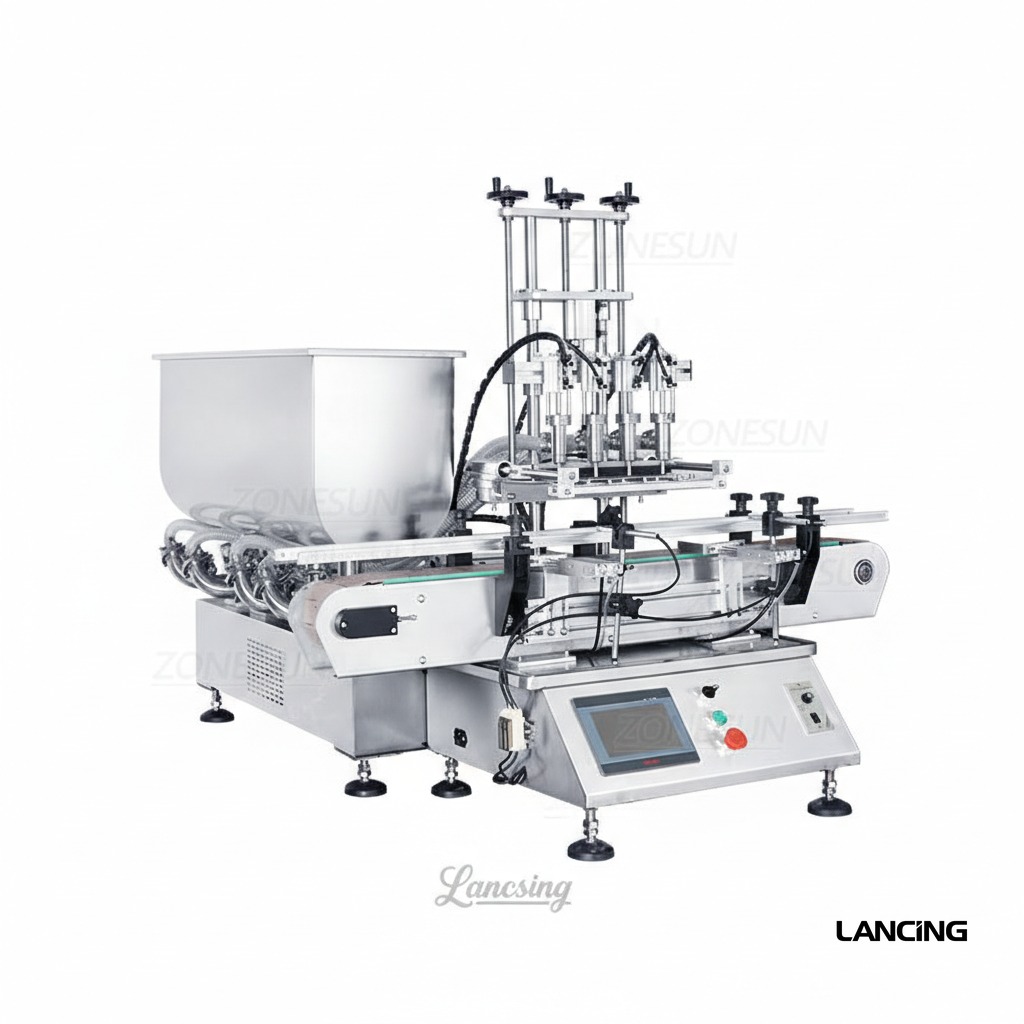
These are the main points to check before asking for a quote. They help avoid a filler that looks suitable on a catalogue page but fails in real production.
These points help Lancing UK shortlist the right piston, pump, cup, semi-automatic or automatic filling route.
Bench or semi-automatic fillers for lower-volume production. Compact inline fillers when bottle presentation and output need improvement. Multi-head fillers for higher throughput and less operator handling.
Send bottle photos, fill volume, cap type, product description and target output.
These related pages cover adjacent product types, machine formats and line-integration decisions.
Yes, provided the bottle is stable enough to handle and the output requirement justifies automation.
Common examples include oils, cleaners, cosmetics, lotions, sauces and other liquid or paste products after review.
Dripping usually comes from product viscosity, nozzle choice, cut-off control and fill profile.
Send product details, bottle photos, fill volume, cap type and expected bottles per minute or per hour.
Send your product, fill volume, container, throughput target and any downstream equipment needed. Lancing UK will narrow the most practical filling route before quotation.