
Measured fill volume
The volume can be set mechanically or through a control system depending on machine type.
A volumetric filling machine fills a measured volume of product into each container. This guide explains the main types, the products they suit and the details a supplier needs before recommending a machine.
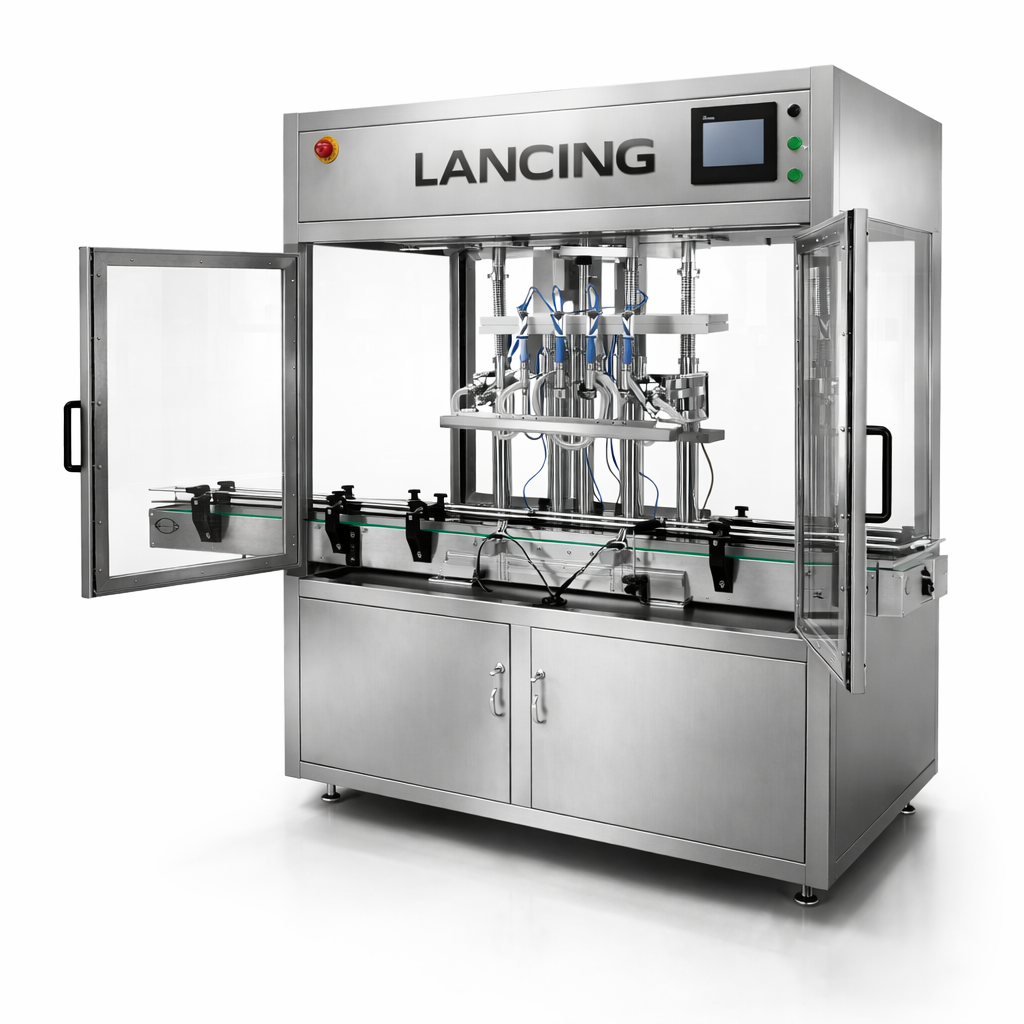
The measured volume may come from a piston cylinder, pump movement, timed flow, cup dosing or another repeatable mechanism. The best mechanism depends on whether the product is a liquid, paste, cream, sauce or granule.
These checks improve the match between the product, filling method and production layout before quotation.
The volume can be set mechanically or through a control system depending on machine type.
Repeatability is affected by product supply, air pockets, foam, nozzle choice and container handling.
Liquids, pastes and granules each require different dosing mechanics.
Manual, semi-automatic and automatic lines suit different outputs and budgets.
The strongest enquiry usually compares two or three realistic machine routes against the real production conditions.
A cylinder draws in and discharges a measured volume, often for viscous liquids and pastes.
A pump moves product in a controlled way, often for flowing liquids or specialist product paths.
A cup measures a volume of free-flowing granules before discharge.
| Best for | Sauces, creams, oils, detergents, honey, gels, lotions and granules after review. |
| Not always best for | Highly variable-density products, powders, foamy liquids at high speed or products needing final weight control. |
| Buyer question | What product behaviour will affect the fill more than the catalogue fill range? |
| Next action | Compare the product, pack and output target with Lancing UK before selecting a model. |
Better production details allow Lancing UK to narrow the filler route quickly and avoid unsuitable catalogue-style recommendations.
Viscosity, particles, temperature, foam, shear sensitivity, hygiene and cleaning expectations.
Bottle, jar or container dimensions, neck opening, fill range and closure type.
Target output, available footprint, utilities, operator level and future expansion plans.
Use these related pages to compare machine types, product behaviour and the information needed before quotation.
A piston filler is one type of volumetric filler. Other volumetric routes include pump filling, timed flow and cup dosing.
No. It measures volume. The final weight depends on product density and how consistent the product is.
Many liquids, pastes, creams, sauces, oils, detergents and free-flowing granules can be considered.
Send the product, fill volume, container details, target output and any cleaning or line integration requirements.
Send your product, fill volume, container, throughput target and any downstream equipment needed. Lancing UK will narrow the most practical filling route before quotation.