
Product cut-off
Thin products drip, while viscous products can tail or string at the end of the fill.
Anti-drip nozzles help control product cut-off at the end of a fill. They are important where dripping, stringing, splash or messy container presentation affects product quality and downstream labelling.
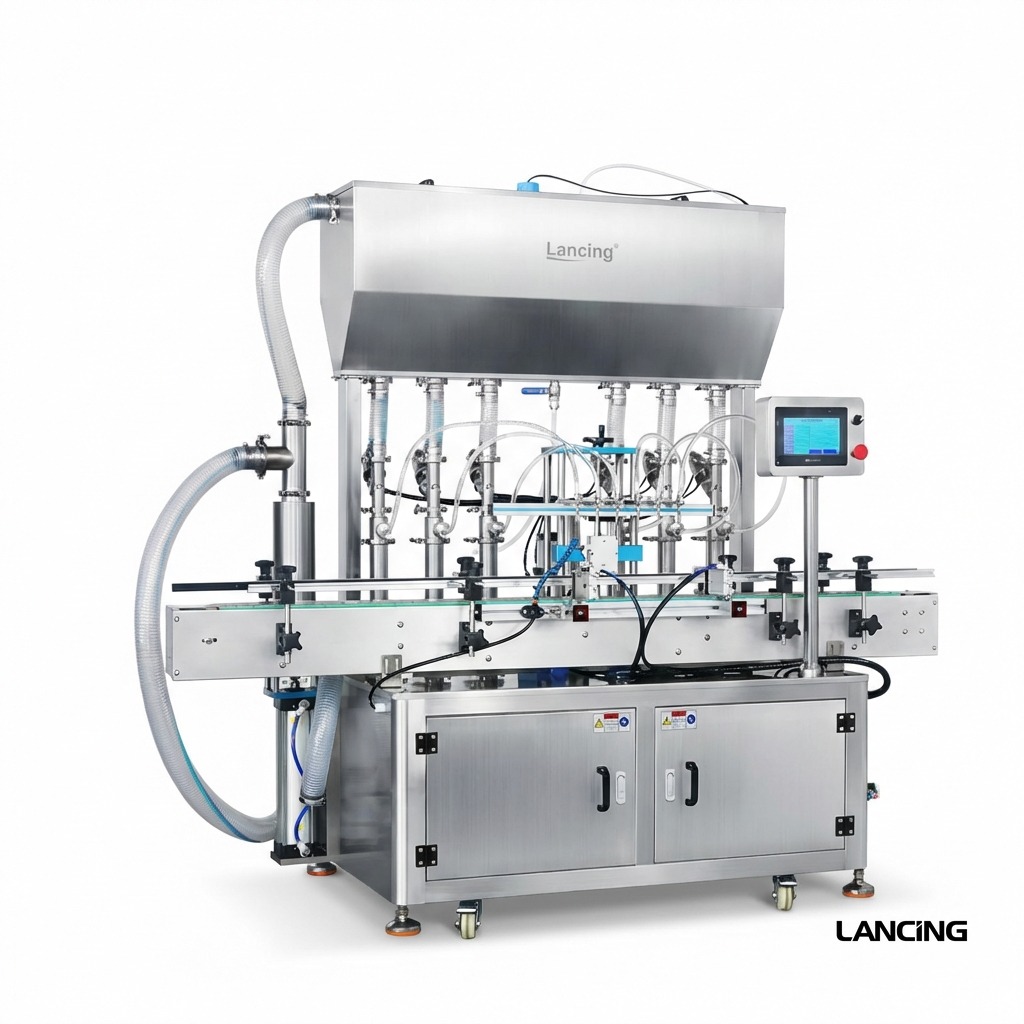
The correct anti-drip or shut-off nozzle depends on product viscosity, particles, fill speed, product pressure and container opening. Nozzle selection should be considered with the filling method, not after it.
These checks improve the match between the product, filling method and production layout before quotation.
Thin products drip, while viscous products can tail or string at the end of the fill.
Shut-off, suck-back or anti-drip mechanisms may be compared depending on product behaviour.
Products with seeds or pieces need a nozzle opening and valve path that will not block.
Food, cosmetic and chemical projects need a realistic cleaning and access route.
The strongest enquiry usually compares two or three realistic machine routes against the real production conditions.
Close the product path at the end of the fill to reduce drips.
Pull back product slightly to reduce tailing or dripping in some applications.
Move into the container when splash, foam or fill presentation is critical.
| Best-fit products | Sauces, oils, detergents, creams, lotions, gels, shampoo, honey and many liquids or pastes. |
| Common issues | Drips, tails, strings, wet bottles, blocked nozzles and label problems. |
| Important checks | Viscosity, particles, fill speed, pressure, neck opening and cleaning requirements. |
| Quote information | Product sample details, current filling problem, pack type and target output. |
Better production details allow Lancing UK to narrow the filler route quickly and avoid unsuitable catalogue-style recommendations.
Viscosity, particles, temperature, foam, shear sensitivity, hygiene and cleaning expectations.
Bottle, jar or container dimensions, neck opening, fill range and closure type.
Target output, available footprint, utilities, operator level and future expansion plans.
Use these related pages to compare machine types, product behaviour and the information needed before quotation.
It is a nozzle or valve arrangement designed to reduce product dripping after each fill.
Not always. Product behaviour, pressure, fill speed and nozzle design all affect the result.
Often they need some form of cut-off control because thick products can tail or string between fills.
Yes, cleaner containers can reduce downstream labelling problems, especially where labels need to be applied to dry surfaces.
Send your product, fill volume, container, throughput target and any downstream equipment needed. Lancing UK will narrow the most practical filling route before quotation.