
Product behaviour
Check viscosity, particles, foam, temperature and whether liquids, oils, cleaners, foaming liquids and transparent bottles where level appearance may matter need gentle handling or positive displacement.
Compare fill-to-level and volumetric filling for UK bottle filling projects. Choose by appearance, volume accuracy, foaming and container variation.
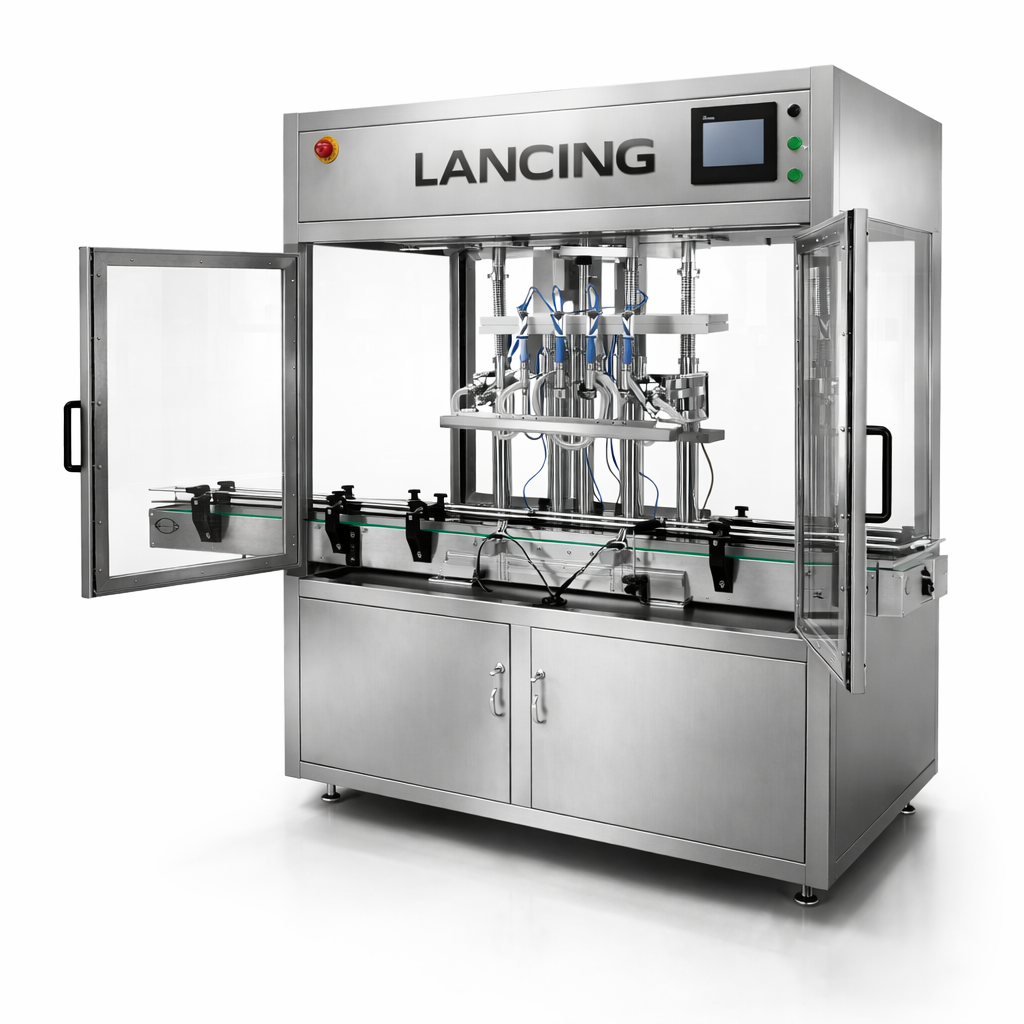
This page is written for buyers comparing bottle fill appearance against measured volume requirements. The aim is to help narrow the filling route before money is spent on a machine that may not suit the product, pack format or output target.
These non-negotiable details decide whether piston, pump, cup or integrated filling equipment should be compared.
Check viscosity, particles, foam, temperature and whether liquids, oils, cleaners, foaming liquids and transparent bottles where level appearance may matter need gentle handling or positive displacement.
Confirm the smallest and largest fill size, acceptable tolerance, container headspace and the effect of speed on repeatability.
Review bottle or jar stability, neck opening, conveyor presentation, cap or lid route and whether the machine must integrate downstream.
Plan product-contact access, change parts, washdown expectations and the realistic time needed between products or pack sizes.
Good filling machinery specification starts with the product and container, then works outward to output, controls and line integration.
This page targets buyers comparing bottle fill appearance against measured volume requirements and explains how Lancing UK would narrow the practical machine route.
The likely route is choosing between level control and measured volumetric dosing, but the final choice should be based on product samples, containers and output target.
The fastest way to get a useful shortlist is to send product details, container photos, fill volume range, cap/lid details and target throughput.
| Primary buyer need | buyers comparing bottle fill appearance against measured volume requirements |
| Relevant products | liquids, oils, cleaners, foaming liquids and transparent bottles where level appearance may matter |
| Likely filling route | choosing between level control and measured volumetric dosing |
| Best next step | Send Lancing UK the product, pack and output details so the machine route can be shortlisted before quotation. |
Fill-to-level filling targets a consistent visual level in the container, which may be useful for transparent bottles.
Volumetric filling dispenses a measured volume, which can be preferable when the declared amount matters more than visual level.
It depends on product foam, container consistency, legal fill requirement and the importance of shelf appearance.
These pages help compare the machine type, product category and line-integration route around this search.
Send your product, fill volume, container, throughput target and downstream equipment requirement. Lancing UK will help narrow the correct filling route before quotation.
Volumetric filling targets a measured quantity. Fill-to-level systems target a common liquid height in the container. Bottle manufacturing variation means those two objectives are not always identical.
| Decision factor | Volumetric filling | Fill-to-level filling |
|---|---|---|
| Primary control | Defined delivered volume from piston, pump, flow measurement or another calibrated route | Liquid height controlled by the nozzle and return/level arrangement |
| Effect of bottle capacity variation | Equal volume may show a different visible level | Equal level may contain a different volume |
| Strong use case | Quantity control where the measured dose is the key requirement | Consistent shelf presentation in compatible rigid bottles |
| Product considerations | Viscosity, air, temperature, measurement principle and nozzle cut-off | Free flow, foam, return path, bottle finish and ability to establish a stable level |
| Trial evidence | Individual quantities, variation, head results, speed and cut-off | Visible level distribution, actual quantities, bottle variation, foam and cycle rate |
Use containers from normal production rather than a small hand-selected group. Measure or otherwise characterise internal capacity variation so the level-versus-volume trade-off is visible.
For each fill, retain the delivered quantity and the visible level. This prevents a visually attractive test from concealing unacceptable quantity variation, or a good volumetric test from overlooking poor shelf presentation.
Check foam collapse, cap application, container movement and label presentation. A level that looks correct immediately after filling may change before the product reaches final inspection.
For bottle-specific line and handling options use Bottle Filling Machines UK. This guide remains focused on the measurement principle.
These answers explain the checks that normally need to be completed before a machine configuration can be confirmed.
Manufacturing variation changes the internal capacity of each container. Fill-to-level follows the bottle geometry, so equal visible levels can contain slightly different quantities.
A calibrated volumetric method is normally the direct comparison when the controlled quantity is volume. The complete compliance and verification method still needs to be agreed for the product and market.
Yes. If bottles vary internally, the same delivered volume can sit at different heights. This may be commercially acceptable or may require tighter container control.
They are commonly compared for compatible free-flowing liquids in rigid containers where equal shelf appearance matters. Foam, viscosity, return flow and bottle finish must be assessed.
Use a representative sample of containers, measure both delivered quantity and visible level, record bottle variation, foam and cycle rate, then choose the criterion that matters to the product claim and presentation.
Send representative bottles from normal production so visible level and delivered volume can be measured in the same trial.