
Foam level
Check how much foam is created at the target fill speed.
Foaming liquids can look simple but often need careful control of nozzle depth, filling speed, product pressure and container handling to avoid poor fill levels and messy bottles.
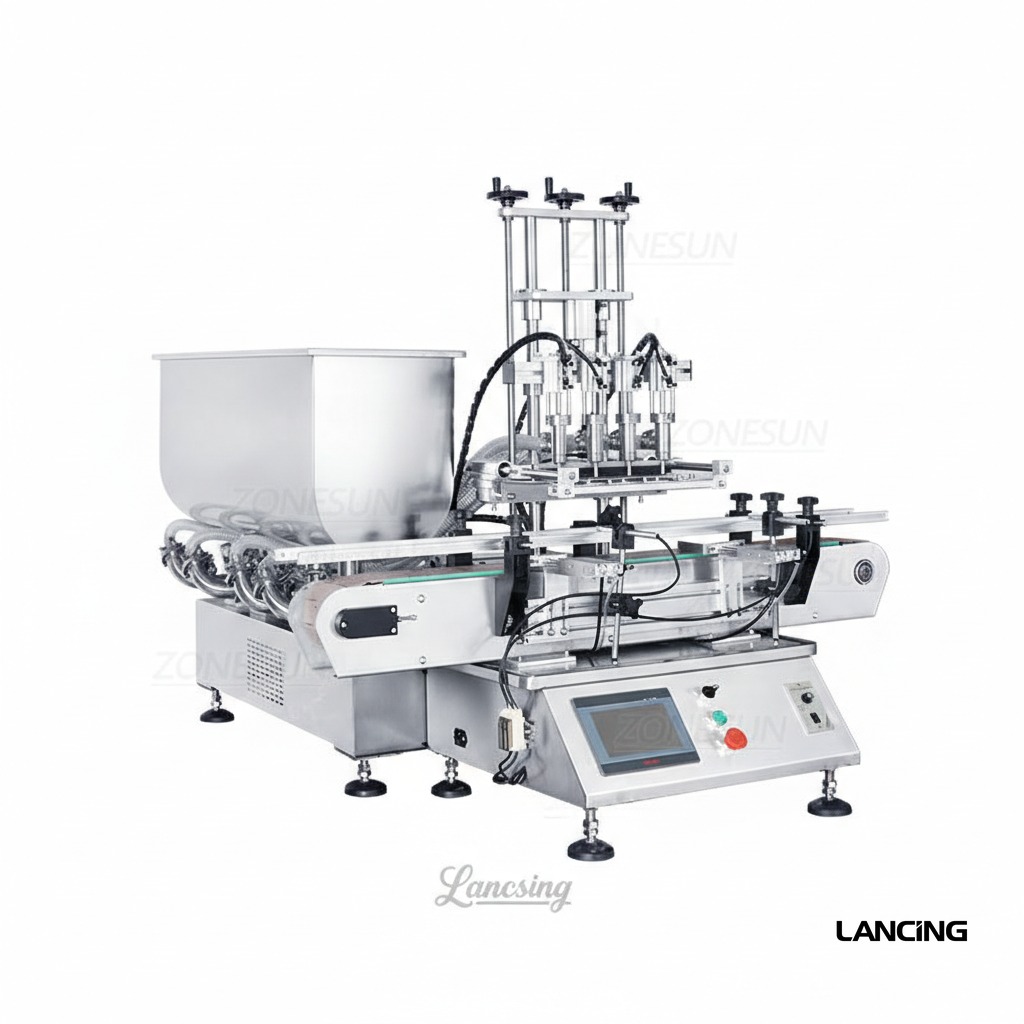
Detergents, soaps, cleaners and similar liquids may need bottom-up filling, slower fill profiles or anti-foam handling. The correct route depends on the liquid, bottle and output target.
These checks improve the match between the product, filling method and production layout before quotation.
Check how much foam is created at the target fill speed.
Bottom-up filling or diving nozzles may be needed for some products.
Narrow necks, shoulders and tall bottles can increase foam and splash issues.
Higher speed can increase foam unless the filling profile is controlled.
The strongest enquiry usually compares two or three realistic machine routes against the real production conditions.
May suit some free-flowing liquids if foam can be controlled.
Can be considered where measured displacement is needed.
Useful when capping and labelling must run with clean, consistent bottles.
| Best-fit products | Detergents, cleaning liquids, soap, sanitiser, personal-care liquids and low-viscosity products. |
| Common problems | Foaming, short fills after foam collapse, wet bottles, inconsistent fill height and poor label application. |
| Important checks | Nozzle movement, fill speed, anti-drip cut-off, bottle neck and product temperature. |
| Quote information | Product sample details, bottle photo, target speed, foam behaviour and fill tolerance. |
Better production details allow Lancing UK to narrow the filler route quickly and avoid unsuitable catalogue-style recommendations.
Viscosity, particles, temperature, foam, shear sensitivity, hygiene and cleaning expectations.
Bottle, jar or container dimensions, neck opening, fill range and closure type.
Target output, available footprint, utilities, operator level and future expansion plans.
Use these related pages to compare machine types, product behaviour and the information needed before quotation.
Foam can be caused by turbulence, product pressure, nozzle height, bottle shape, surfactants and filling speed.
It can help in some applications, but the product and bottle should be checked first.
Often yes. Detergents may need better foam control, chemical compatibility and anti-drip nozzles.
Send the product type, bottle details, target fill volume, current foam problem and desired output.
Send your product, fill volume, container, throughput target and any downstream equipment needed. Lancing UK will narrow the most practical filling route before quotation.