
Particle size
Large, mixed or irregular particles may bridge or affect repeatability.
Granule filling needs the machine to control product flow, fill volume and pack presentation. The right route may be a volumetric cup filler, an auger or a weighing system depending on product flow and accuracy requirements.
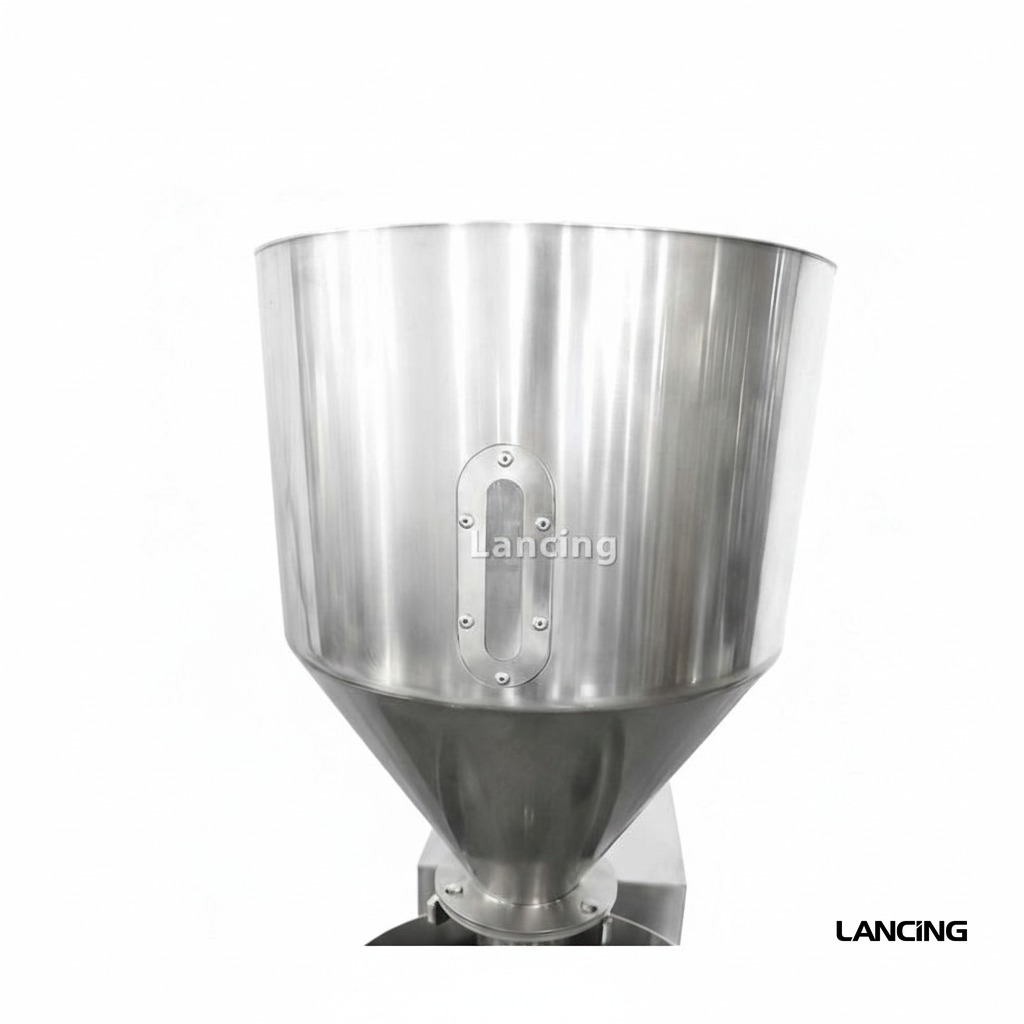
Free-flowing granules can often be dosed quickly by volume, but only when the product behaves consistently. Dust, mixed particle sizes, fragile product and variable bulk density need to be considered before specifying the machine.
These checks help Lancing UK narrow the correct filling method, machine format and line layout before quotation.
Large, mixed or irregular particles may bridge or affect repeatability.
Dusty products may need enclosed handling, extraction or alternative dosing.
Decide whether volumetric repeatability is enough or whether weight correction is needed.
The machine needs a clean path from hopper to measuring device and into the pack.
There is rarely one universal filler for every product. The shortlist should compare the practical filling routes against real production conditions.
Best for stable, free-flowing products with repeatable bulk density.
For jars, bottles and tubs where indexing and opening size matter.
For projects where granules need to be paired with bagging or sealing equipment.
| Best-fit products | Beans, seeds, coffee beans, sugar, tablets, small granules |
| Machine routes | Cup dosing, auger comparison, weighing comparison depending on product |
| Important checks | Flow, bulk density, dust, particle size, pack opening, output speed |
| Typical next step | Provide product sample, target fill quantity, pack type and accuracy expectation |
Use these pages to compare product groups, machine types and automation routes.
Yes, if the product is free-flowing and has stable bulk density. If the product varies significantly, a weigh-based route may need to be compared.
Some powder products need auger or special feed control rather than cup dosing. The correct route depends on flow, dust and target accuracy.
Yes. It can be integrated with conveyors, container handling, sealing, labelling and coding where the pack format requires it.
Send your product, fill volume, container, throughput target and any downstream equipment needed. Lancing UK will narrow the most practical filling route before quotation.
Granule filling is not one technology. Free-flowing beans, seeds or tablets can suit a measuring cup, while fine cohesive powders may need an auger and density-sensitive products may need direct weighing.
| Product condition | Strong first comparison | Reason | Evidence required |
|---|---|---|---|
| Free-flowing, stable bulk density | Volumetric cup filler | Fast defined-volume dosing with a simple measuring element | Cup fill and discharge consistency, mass distribution, particle damage and outlet clearance |
| Fine, cohesive or poorly flowing powder | Auger comparison | Controlled screw movement can meter a powder that will not level reliably in an open cup | Auger size, rotations, agitation, dust, product compaction and cleaning |
| Variable density or mass-critical pack | Weigh filling | Load cells control the quantity directly by mass | Coarse/fine feed, in-flight product, vibration, settling, target rate and tolerance |
| Mixed pieces with segregation risk | Multihead or controlled weigh route | Composition and total mass may both need control | Representative blend, component distribution, drop height and breakage |
Observe bridging, rat-holing, surging, static and dust in a representative hopper. A product that pours freely from a small sample bag may behave differently under production head and vibration.
Record individual fills across the expected bulk-density range. For cup dosing, compare the resulting mass with the tolerance. For weighing, assess coarse/fine cut-off and product still falling after the stop signal.
Inspect breakage, coating damage, segregation and retained product. The machine must preserve the saleable product, not only achieve a numerical quantity.
This page concentrates on defined-volume cup dosing. For direct mass control and specialist weighing systems, review Weigh Fillers UK.
These answers explain the checks that normally need to be completed before a machine configuration can be confirmed.
Start with particle size distribution and loose/settled bulk density, then assess flow, dust, static, fragility and segregation. These properties determine whether cup, auger or weigh dosing is realistic.
Only if bulk density and cup filling remain stable enough. The correct way to decide is to measure the mass distribution from representative batches at the intended cup setting.
Differences in size, shape and density can separate during transport, vibration or hopper movement. A consistent total quantity may still have the wrong composition if segregation is not controlled.
Observe breakage through the feeder, cup or weighing path, discharge funnel and container impact. Compare the finished product condition with the buyer’s quality standard.
Use a specialist weigh-filler assessment when the sale quantity is controlled by mass, bulk density varies materially, or the product needs direct mass feedback. Weigh Fillers UK covers those systems in more depth.
Send the granule, particle-size range, bulk-density data, target quantity and pack opening for a cup-versus-weigh assessment.
A fixed volume delivers a different mass when the product packs or settles differently. Use the cup-filler bulk-density guide.
Compare them when product flow, dust, particle shape, density variation or the controlled sale quantity makes one method materially stronger. Use the selection matrix.
Refill can change level, compaction and the mix of fines and larger pieces. Include refill events in the sample sequence.
Provide target mass or volume, bulk-density range, particle size, moisture, flow problems, dust, breakage limits, pack details and representative samples.