
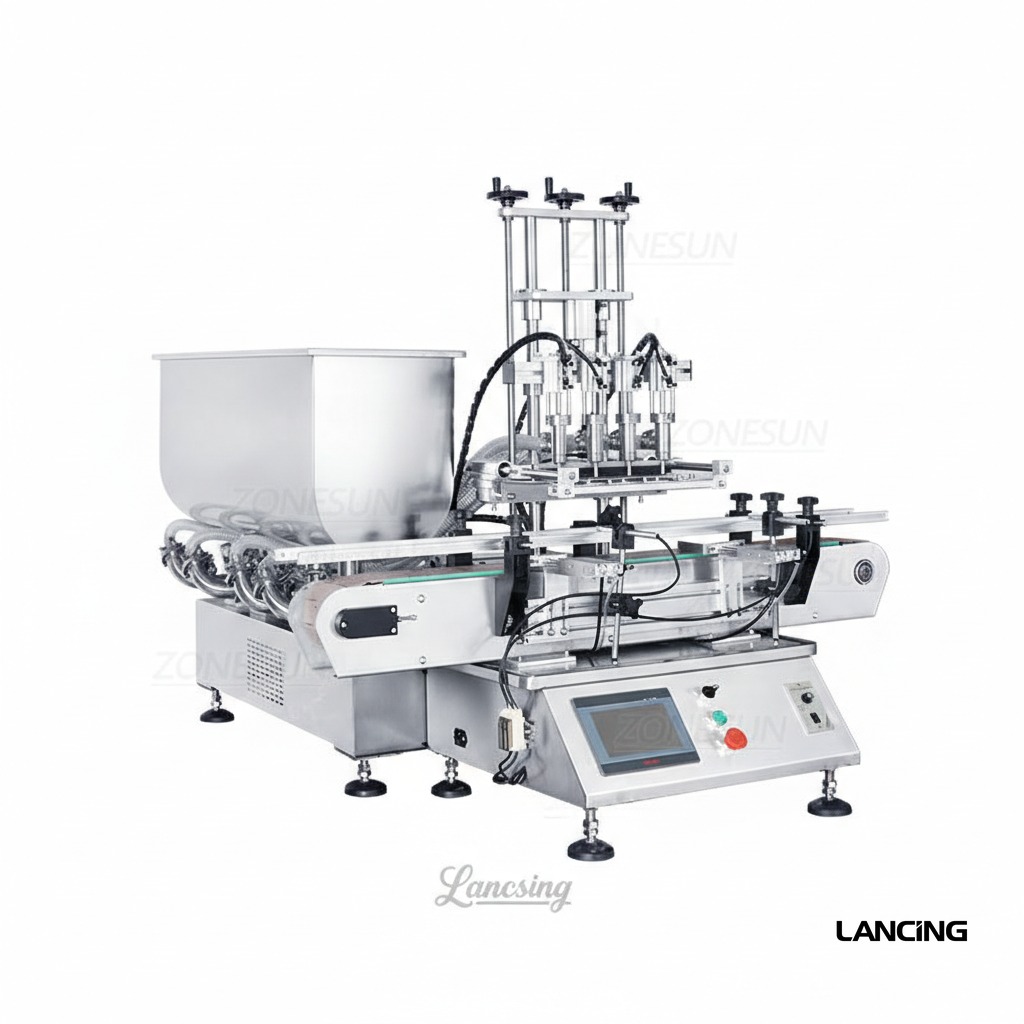
Semi-automatic fillers
Flexible workstations for start-ups, test batches, seasonal products or frequent changeovers where operator control is still useful.
Explore semi automaticSpecify piston, pump or volumetric cup filling equipment for liquids, pastes, sauces, creams, powders and granules. Built around the product behaviour, container format, changeover requirement and output target.
Compare volumetric filling equipment by product behaviour, dosing method, container format, output and line integration before requesting a machine shortlist.
Use these guides to compare machine principles, prepare product and container data, and request a better-informed machinery shortlist.
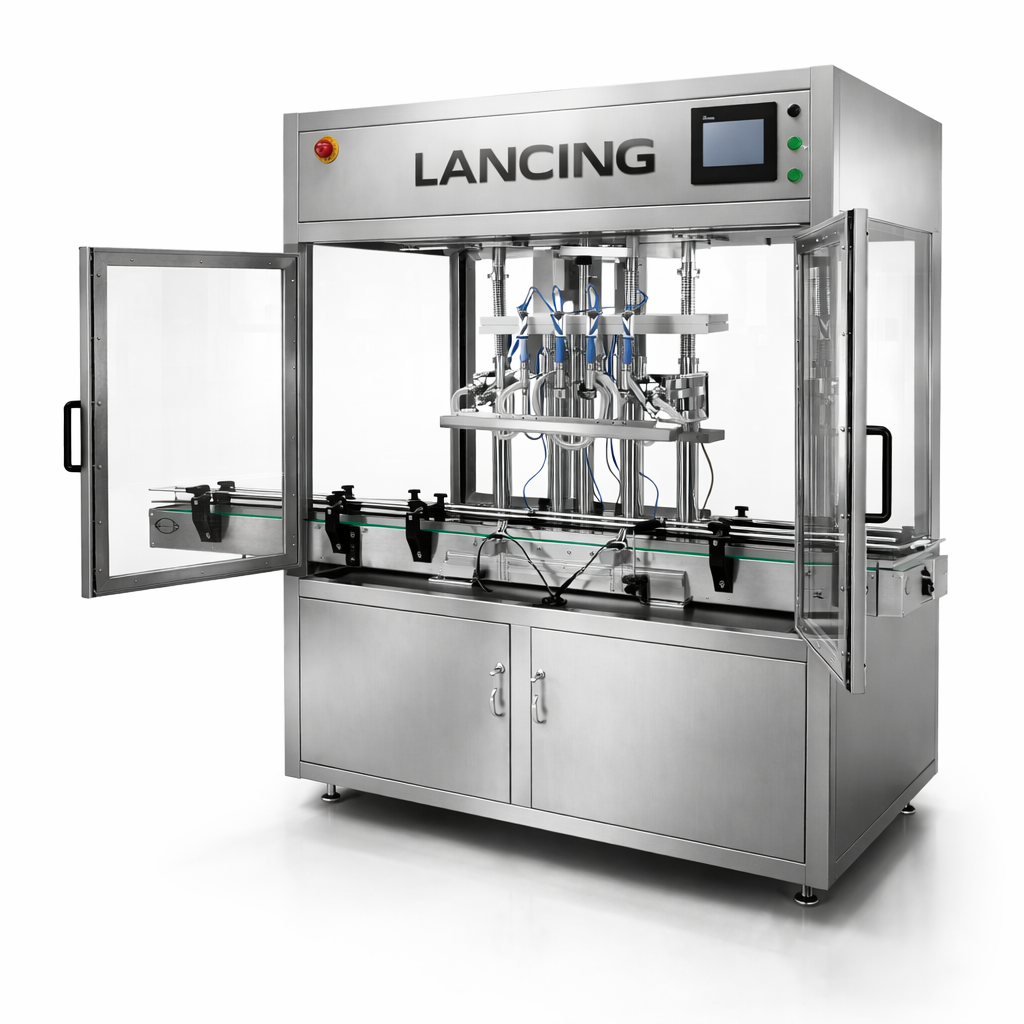
A volumetric filler is not a single machine type. The right route changes with viscosity, foam, particulates, fill volume, container stability, cleaning expectations and whether the filler is standalone or part of a wider line.
Compare semi-automatic machines for smaller batches, compact automation for growing production and pro-range filling systems for higher throughput lines.
Flexible workstations for start-ups, test batches, seasonal products or frequent changeovers where operator control is still useful.
Explore semi automatic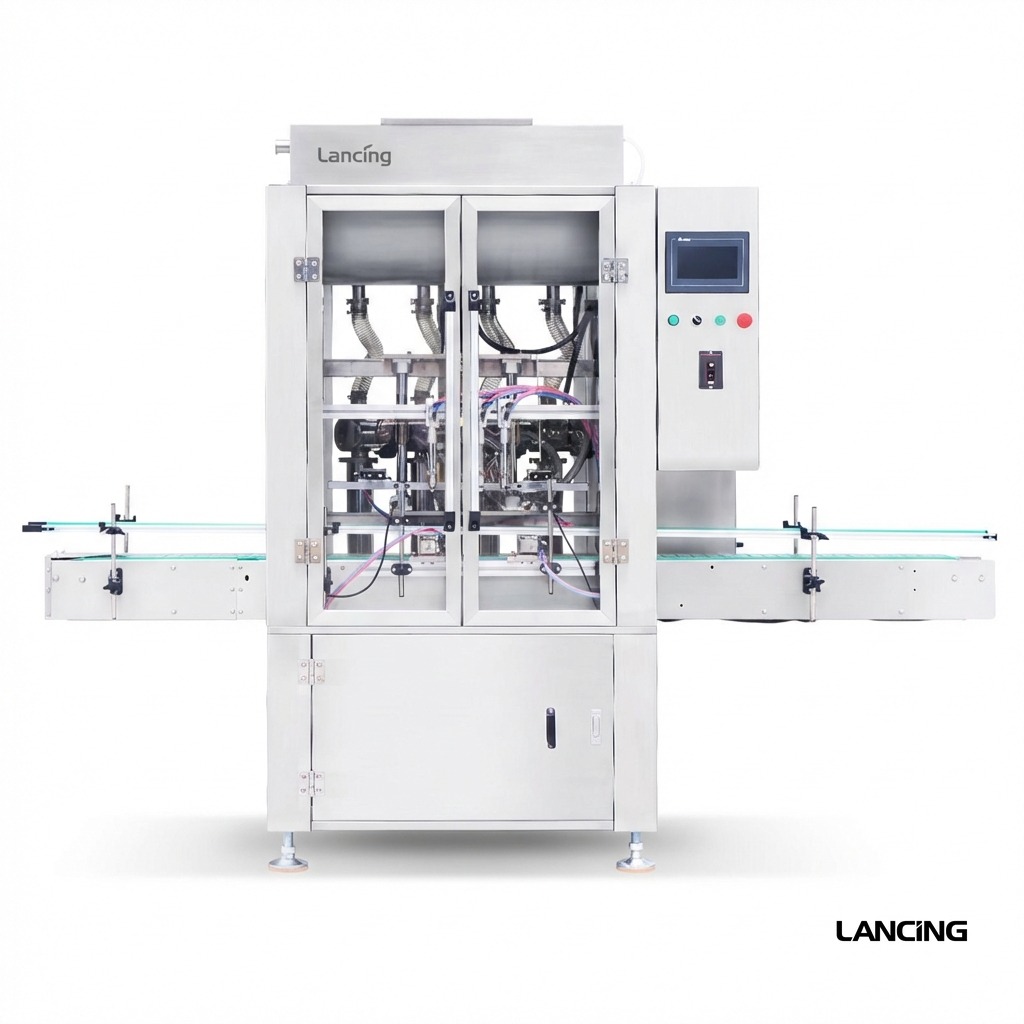
Smaller-footprint machines for repeatable liquid and paste filling with better presentation and less manual handling.
Explore compact systems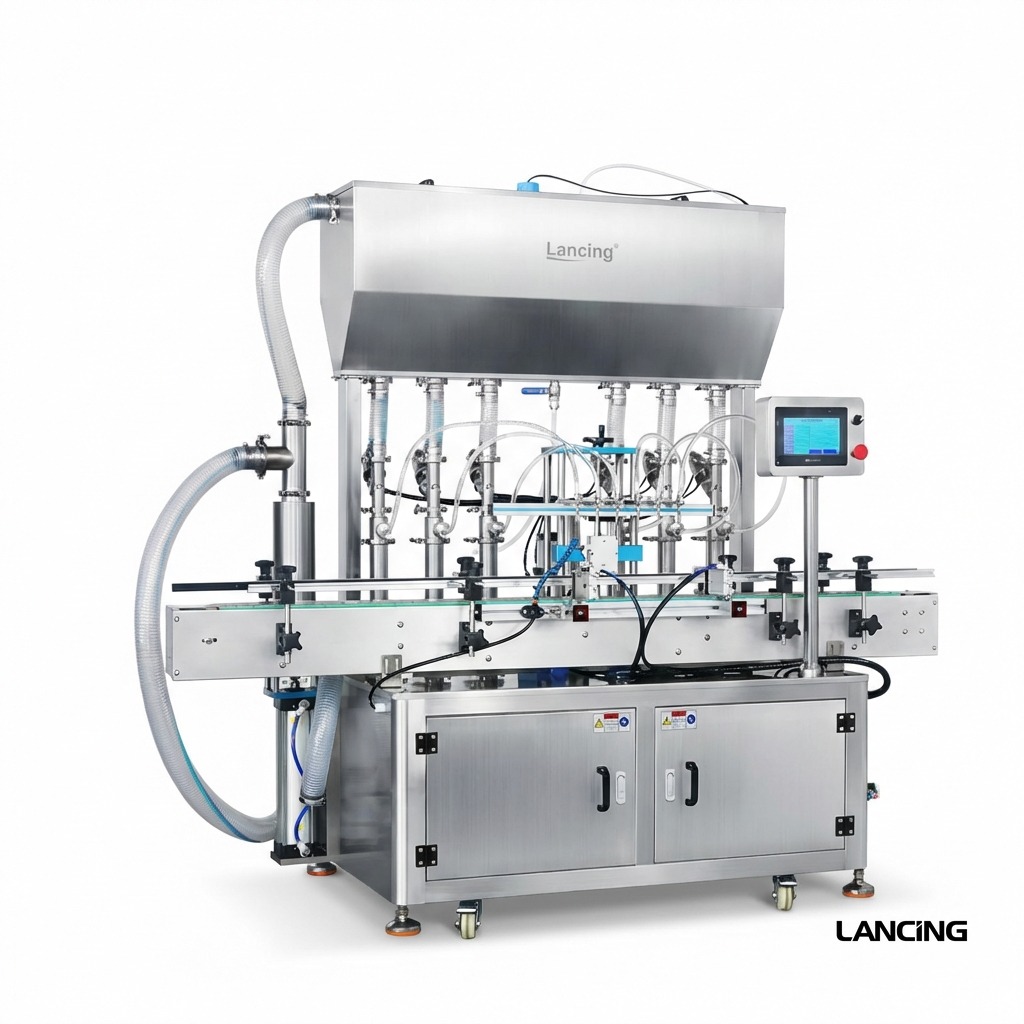
Inline piston and multi-head systems for higher-volume manufacturing where conveyors, cappers and labellers need to run together.
Explore automatic fillersUse the product behaviour to avoid the wrong machine route. Thin liquids, viscous creams and free-flowing granules all need different dosing mechanics and line controls.
For water-like liquids, oils, detergents and similar flowing products where repeatable fill volume and clean cut-off matter.
For sauces, gels, cosmetic creams, lotions, shampoo, honey and viscous products where piston or rotor pump systems are normally shortlisted.
For beans, seeds, coffee, sugar, small granules and powders where cup, auger or weigh dosing may be compared by accuracy and flow.
For filling projects that also need capping, labelling, induction sealing, coding, accumulation and end-of-line packing.
Lancing UK supports semi-automatic and fully automatic packaging machinery projects across filling, capping, labelling, sealing, conveying and line integration.

A repeatable volume setting does not remove the need to examine product delivery, condition and the finished pack. Separate the dosing principle from the way the product reaches the dose chamber, cup or pump and then enters the container.
Volume and mass are different quantities. If a mass measurement is used to assess a volumetric dose, use the actual product's relevant density and temperature basis; do not assume one gram equals one millilitre. For powders and granules, changes in bulk condition can alter the mass occupying a fixed space.
Compare results as the source empties, after replenishment and after a pause. Observe air, interrupted flow or changes in how the product enters the dosing unit. A quantity adjustment may temporarily compensate for a supply problem while leaving its cause unresolved.
Watch the nozzle or discharge after the intended dose ends. Drips, strings, splashes or retained product can change the amount in the accepted container and contaminate its closing area. Keep those observations alongside the measured quantity, particularly during indexing and restart.
Test the smallest and largest intended dose with the relevant containers and product conditions. Record which tooling or settings change and which checks release the first accepted pack. Do not treat a successful mid-range run as evidence for the whole advertised adjustment range.
Retain individual results with the product batch, operating condition and dosing position. Compare the real filling sequence and accepted output with the relevant machine and technical-guide routes already listed on this page.
A volumetric filling machine dispenses a measured volume of product into a bottle, jar, pouch, tub or other container. Common routes include piston fillers for liquids and pastes, pump-based fillers for flowing liquids and volumetric cup fillers for free-flowing granules.
Volumetric fillers are used for liquids, creams, sauces, gels, oils, detergents, pastes, powders and granules when the fill amount can be controlled repeatably by volume.
Yes. Volumetric filling can be integrated with bottle handling, conveyors, capping, labelling, coding, induction sealing, accumulation and end-of-line packing.
The most useful details are product type, viscosity or particle size, fill volume range, container size, target output, utilities, available footprint and whether the machine needs to integrate with existing equipment.
Send your product, fill volume, container, throughput target and any downstream equipment needed. Lancing UK will help narrow the best machine route before quotation.
Defined-volume dosing is a principle, not a single machine type. The practical route changes with viscosity, particles, foam, bulk density, container opening, cleaning requirements and the output expected from the whole line.
For a piston system, the displaced cylinder volume is governed by cylinder size and stroke. Peristaltic and pump systems control a repeatable delivery cycle, while a cup filler meters the volume contained in a fixed or adjustable cup. The target must be expressed with an agreed tolerance and test method.
Valves, tubing, seals, hoppers and nozzles must suit the product. Thick, stringy, foaming, abrasive, corrosive or particulate products create different limits. Suck-back can improve cut-off, but excessive retraction can draw air into the nozzle or disturb a consistent dose.
Output should be measured with the intended container, closure and downstream stages. A filler that cycles quickly in isolation may still be limited by bottle presentation, capping, labelling, operator loading, product replenishment or cleaning access.
This overview compares piston displacement, peristaltic delivery, pump dosing and cup measurement. The linked Lancing catalogues provide deeper ranges for specific liquid, paste, automatic, weigh-filling and bottle-line requirements.
| Requirement | Volumetric guidance | Specialist Lancing route |
|---|---|---|
| Liquids and small-volume dosing | Compare volumetric liquid methods | Liquid Fillers UK catalogue |
| Thick pastes, creams and sauces | Review piston and pump behaviour | Paste Fillers UK specialist range |
| High-output automatic production | Plan the volumetric filling stage | Automatic Filling Machines UK |
| Weight-controlled dry products | Compare cup dosing by volume | Weigh Fillers UK |
| Bottle handling and complete bottle lines | Plan interfaces around the filler | Bottle Filling Machines UK |
No unverified test results or customer claims are published on this site. Project-specific performance is confirmed from the actual product, container and agreed test conditions.
These answers explain the checks that normally need to be completed before a machine configuration can be confirmed.
Record the product batch and temperature, fill setting, container tare, individual delivered quantities, cycle rate, nozzle behaviour and any interruptions. The result should show both closeness to the target and the spread between fills.
No. Published figures are reference values under stated conditions. Product viscosity, temperature, particles, feed pressure, container handling, machine speed and the chosen nozzle can all alter the result, so the real product and pack should be tested.
Weigh filling is often the stronger route when the selling quantity is controlled by mass, bulk density varies significantly, or large containers need direct mass feedback. Volumetric cup dosing remains useful when a dry product flows consistently and a defined volume is acceptable.
The neck opening, container stability, headspace, cap or lid and downstream handling determine nozzle access, indexing, drip control, conveyor layout and the practical speed of the complete line.
Send the product, container, fill range and target output so Lancing UK can compare the practical filling routes.
The following resources cover distinct decisions that are often missed when only product viscosity and fill volume are supplied.
Check whether the required minimum and maximum doses sit inside a practical piston operating window.
Cylinder size guideCompare product passage, particles, suction, cleaning and the relationship between valve and nozzle behaviour.
Valve selectionDefine samples, operating states, head-specific results, restarts and acceptance evidence.
Trial protocolAlign the meaning of accuracy, repeatability, stroke, suck-back, change parts, FAT and SAT.
Open glossaryThese questions turn a broad machinery enquiry into a specification that can be checked with the real product, pack and production method.
A useful volumetric filler shortlist needs the product in its real production condition, the complete fill range, representative containers and closures, the required output, available utilities, cleaning expectations and any capping, labelling or coding stages. Product names alone are not enough because viscosity, foam, particles, temperature and feed method can change the practical filling route.
One volumetric filling machine can sometimes handle both flowing liquids and thicker products, but only when the cylinder or pump, valves, seals, hoses and nozzles suit the complete product range. A wide viscosity span may require change parts, separate recipes or a different dosing method for one product. Both ends of the range should be trialled before the machine is approved.
Cleaning and cross-product changeover can be as important as whether the product can physically pass through the machine.
Compare filling accuracy claims only when the product, target dose, container, measurement method, sample size, machine speed, number of heads and operating state are stated. A percentage quoted with water at one dose cannot be treated as proof for a cold paste, a foaming detergent or a multi-head production line. The acceptance test should define both closeness to target and variation between individual fills.
The fastest route is to define the hardest acceptable product and pack combination first, send representative samples, agree how quantity will be measured and decide which operating states must be tested. Lancing can then compare realistic machine routes rather than repeating demonstrations with incomplete information. A concise written trial plan also makes supplier results easier to compare.
Use the volumetric filling trial protocol to define samples, settings, results and acceptance evidence.
Open the volumetric filling question centre · Use the buyer guide · Plan a controlled product trial · Prepare quotation information
Send the product, container, fill range and output target so Lancing can narrow the safest volumetric filling route.
These technical guides cover output, measurement, temperature, materials and dry-product density without replacing the product-and-pack trial.
Use model-level reference data to narrow the machines worth testing, then confirm every value with the actual product, dose, container and line sequence.
A catalogue configuration is the beginning of a filling project. The retained product path, downstream quantity checks and changeover method can change the practical specification even when the nominal dose remains the same. Keep these decisions connected to the original product and container brief.
A useful volumetric-filler enquiry states the operating conditions that must remain repeatable: the product supply, complete pack, dose range, accepted output, cleaning sequence and quantity-checking method. Identify any required controller interface separately. This allows Lancing to distinguish a standard configuration from features that need application review or a witnessed trial.
Use the quotation checklist to record requirements and the published model comparison to shortlist configurations. Send the specification to Lancing with the assumptions clearly marked.
Volumetric filling measures a defined volume; a weight-based check measures mass. Both can be useful, but they answer different questions. State the finished-pack requirement and product variation before comparing the mechanism.
Compare piston or pump routes with the real product condition, fill range and container opening. Include supply pressure or head, valves, seals, tubing and nozzle cut-off. Temperature, entrained air or product changes can affect the delivered result, so retain individual fills and operating conditions rather than relying on one nominal setting.
A volumetric cup meters the space occupied by the product. The delivered mass depends on its bulk condition as well as the cup volume. As a planning example, 0.5 litres at an observed bulk density of 0.6 kilograms per litre corresponds to 0.3 kilograms. If density changes, that calculation changes even with the same cup setting. Use representative product and the required quantity checks in the trial.
Choose a measurement method, sample plan and target for each format before testing. Separate startup, normal running, replenishment and restart results. Include the container, closing stage and product handling in the accepted-output record. Where the selling quantity is controlled by mass or bulk density varies materially, compare a suitable weigh-dosing route rather than assuming a larger cup solves the problem.
Continue with Volumetric cup dosing options · Bulk density and delivered mass · Pneumatic and servo piston filling · Using weight to check fill volume.
Build a volumetric-filling enquiry around a defined product and pack combination. Record the intended dose, the container opening, the product condition at filling and the result the operator must accept. Keep a separate entry for each meaningful combination, rather than assuming one trial represents an entire range.
When comparing piston, pump and cup-dosing options on this site, ask how the proposed setup will be selected, checked and restored after changeover. A useful response identifies the trial product, the proposed contact parts and the conditions under which the result was observed. Keep proposed capability separate from the configurations actually demonstrated.
Agree who owns the production recipe and how changes will be recorded. Include the method used to check filled packs, the handling of the first packs after a restart, and the point at which a changed product or container requires a further review. These decisions make a machinery discussion more specific without relying on a headline speed or dose range alone.
Treat it as a starting point for the named product and pack. Ask what evidence supports other formulations, temperatures or containers, and record any further checks needed before they enter the approved operating range.